CALL TODAY 646-846-1136 | EMAIL


Small Bowel Obstruction Surgery: When Emergency Intervention Is Required
A small bowel obstruction (SBO) is a serious medical condition that occurs when the normal passage of contents through the small intestine becomes blocked. This blockage can lead to severe abdominal pain, vomiting, dehydration, and potentially life-threatening complications if not treated promptly. While some cases can be managed with non-surgical treatments, others require urgent or emergency surgery to restore normal bowel function.
For patients in NYC, understanding the causes, warning signs, and treatment options for small bowel obstruction can help ensure timely medical care and improved outcomes.
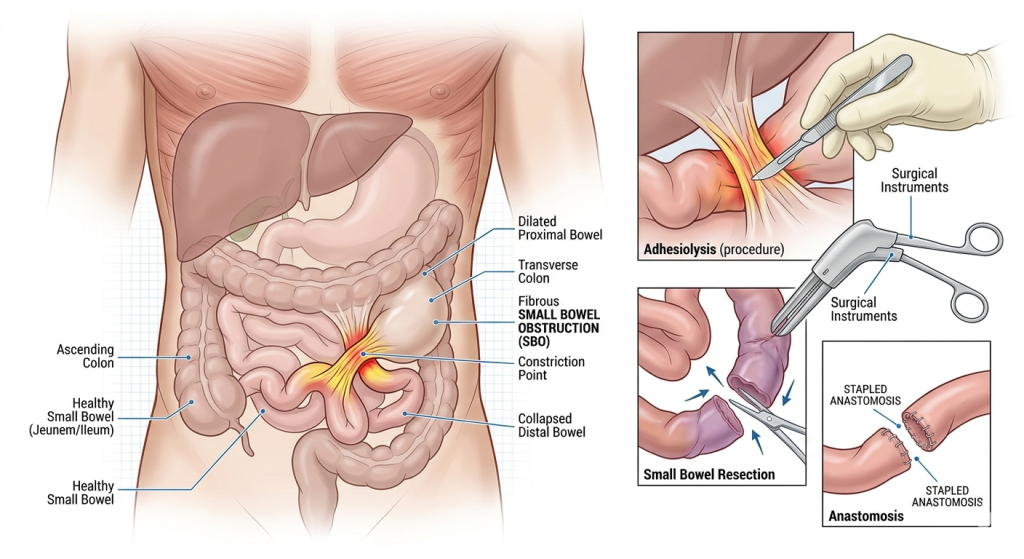
What Is a Small Bowel Obstruction?
The small intestine is responsible for absorbing nutrients and transporting digested food through the digestive tract. When a blockage occurs, food, fluids, and gas cannot move normally through the intestines.
This obstruction may be partial or complete, and it can occur suddenly or develop gradually over time.
Common Causes of Small Bowel Obstruction
Several conditions can lead to a blockage in the small intestine.
- Abdominal adhesions: Bands of scar tissue that form after previous surgery are the most common cause.
- Hernias: Portions of the intestine may become trapped in a weakened area of the abdominal wall.
- Tumors: Both benign and malignant growths can obstruct the bowel.
- Inflammatory bowel disease: Conditions like Crohn’s disease can narrow sections of the intestine.
- Twisting of the intestine (volvulus): This can cut off blood supply and create a surgical emergency.
- Intussusception: One segment of intestine slides into another, causing blockage.
Identifying the underlying cause is critical in determining the most appropriate treatment.
Symptoms of Small Bowel Obstruction
Symptoms often develop quickly and may worsen over time. Common warning signs include:
- Severe abdominal pain or cramping
- Nausea and persistent vomiting
- Abdominal bloating or swelling
- Inability to pass gas or have a bowel movement
- Loss of appetite
- Dehydration and fatigue
If the obstruction cuts off blood flow to the intestine, symptoms may become more severe and require immediate surgery.
How Small Bowel Obstruction Is Diagnosed
Doctors use a combination of physical examination and imaging tests to diagnose SBO.
- CT scans: The most common imaging test used to identify the location and cause of obstruction.
- Abdominal X-rays: May show air-fluid levels indicating a blockage.
- Blood tests: Used to evaluate infection, dehydration, and electrolyte imbalances.
Early diagnosis allows doctors to determine whether surgery is necessary.
Non-Surgical Treatment Options
In some cases, especially partial obstructions, doctors may attempt non-surgical management first.
- Hospital observation and monitoring
- Intravenous fluids to treat dehydration
- Nasogastric tube placement to decompress the stomach
- Bowel rest (no food or drink temporarily)
If the obstruction resolves, surgery may be avoided. However, if symptoms worsen or fail to improve, surgical intervention becomes necessary.
When Is Emergency Surgery Required?
Emergency surgery is required when:
- The obstruction is complete
- Blood supply to the intestine is compromised
- There is bowel perforation or infection
- Non-surgical treatment fails
- The patient develops severe or worsening symptoms
Prompt surgery can prevent serious complications such as tissue death (necrosis) or life-threatening infection.
Surgical Treatment for Small Bowel Obstruction
The goal of surgery is to remove the blockage and restore normal intestinal function.
Depending on the cause, surgery may involve:
- Removing adhesions causing the obstruction
- Repairing a hernia trapping the intestine
- Removing a tumor blocking the bowel
- Untwisting the intestine in cases of volvulus
- Resecting damaged portions of bowel if blood supply has been compromised
Minimally Invasive vs. Open Surgery
Whenever possible, surgeons may use minimally invasive techniques.
Laparoscopic Surgery
- Small incisions and a camera-guided approach
- Less postoperative pain
- Shorter hospital stay
- Faster recovery
Open Surgery
- Required for severe obstructions or extensive scar tissue
- Allows direct access to the abdominal cavity
- Sometimes necessary in emergency situations
The choice of approach depends on the patient’s condition and the complexity of the obstruction.
Recovery After Surgery
Recovery varies depending on the severity of the obstruction and the type of surgery performed.
- Hospital stay typically ranges from several days to a week
- Gradual reintroduction of liquids and solid foods
- Walking soon after surgery to prevent complications
- Avoiding heavy lifting for several weeks
Patients who undergo minimally invasive procedures often recover more quickly.
Potential Complications
Possible risks associated with small bowel obstruction and surgery include:
- Infection
- Bleeding
- Recurrence of obstruction
- Damage to surrounding organs
- Postoperative adhesions
Close monitoring and follow-up care help reduce these risks.
Conclusion: Rapid Treatment Can Save Lives
Small bowel obstruction is a serious condition that requires prompt medical evaluation. While some cases resolve with conservative treatment, others require urgent surgical intervention to prevent severe complications. Advances in surgical techniques—including minimally invasive procedures—have improved outcomes and recovery times for many patients.
If you experience symptoms of bowel obstruction, seeking immediate medical care can make a critical difference in protecting your health and preventing life-threatening complications.
LENOX HILL MINIMALLY INVASIVE SURGERY LLP
155 East 76th Street
New York, NY 10021
Tel: 646-846-1136
Email: lenoxhillsurgeons@gmail.com