CALL TODAY 646-846-1136 | EMAIL


Liver Resection and Tumor Removal: Modern Surgical Techniques in NYC
Liver Resection and Tumor Removal has advanced dramatically over the past two decades, allowing surgeons to treat complex liver diseases with greater precision and improved patient outcomes. One of the most common procedures used to treat liver tumors is liver resection, a surgery in which a portion of the liver containing a tumor is removed. Thanks to modern surgical techniques—including minimally invasive and robotic-assisted procedures—patients in NYC now have access to safer operations, faster recovery times, and better long-term results.
This guide explains what liver resection involves, when it is recommended, and how advanced surgical approaches are improving treatment outcomes.
Understanding Liver Tumors
The liver is one of the largest and most vital organs in the body. It plays an essential role in detoxifying the blood, producing bile for digestion, storing nutrients, and regulating metabolism. When tumors develop in the liver, they can interfere with these important functions.
Liver tumors may be benign (noncancerous) or malignant (cancerous).
- Primary liver cancer: Cancer that begins in the liver, such as hepatocellular carcinoma.
- Metastatic liver tumors: Cancer that spreads to the liver from another organ, most commonly the colon.
- Benign tumors: Such as hemangiomas or adenomas, which may still require removal if they cause symptoms.
Early diagnosis and treatment are critical for achieving the best possible outcomes.
What Is Liver Resection?
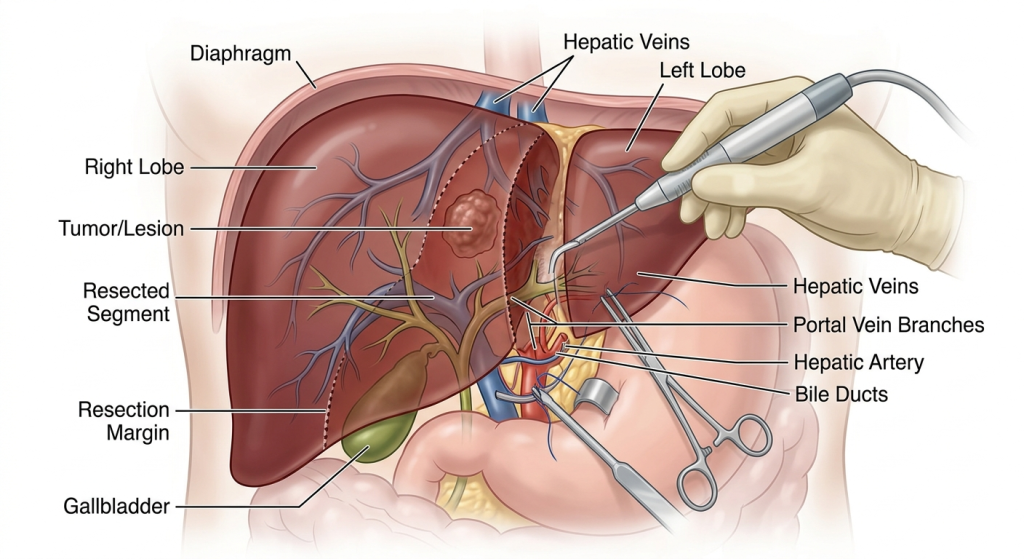
Liver resection is a surgical procedure that removes the portion of the liver containing a tumor while preserving as much healthy tissue as possible.
One unique aspect of liver surgery is the organ’s ability to regenerate. The remaining liver tissue can grow and restore function over time, allowing surgeons to safely remove significant portions when necessary.
Types of liver resections include:
- Segmentectomy: Removal of a small segment of the liver.
- Lobectomy: Removal of an entire lobe of the liver.
- Partial hepatectomy: Removal of a larger section containing multiple segments.
The specific approach depends on the tumor’s location, size, and number.
When Is Liver Resection Recommended?
Surgery may be recommended for patients with:
- Localized liver cancer
- Metastatic tumors confined to the liver
- Benign tumors causing pain or complications
- Cysts or lesions suspected to be cancerous
Candidates for liver resection typically have sufficient healthy liver function and tumors that can be safely removed.
Modern Surgical Techniques for Liver Tumor Removal
Advances in surgical technology have significantly improved the safety and effectiveness of liver surgery.
Minimally Invasive Liver Surgery
Many liver resections can now be performed using laparoscopic techniques, which involve several small incisions instead of a large open incision.
- High-definition cameras provide detailed views of the liver
- Specialized instruments allow precise removal of tumors
- Surrounding healthy tissue can be preserved more effectively
Benefits include less postoperative pain and quicker recovery.
Robotic-Assisted Liver Surgery
Robotic systems provide surgeons with enhanced dexterity and 3D visualization, making complex liver resections safer.
- Greater precision during delicate dissections
- Improved control of blood vessels
- Better visualization of liver anatomy
Robotic surgery is especially useful for tumors located in difficult-to-access areas.
Advanced Imaging and Navigation
Modern liver surgery often incorporates advanced imaging technologies.
- 3D surgical planning using CT or MRI scans
- Intraoperative ultrasound to identify tumors
- Fluorescence imaging to evaluate blood flow and tissue boundaries
These tools help surgeons remove tumors more accurately while preserving healthy liver tissue.
Preparing for Liver Surgery
Before surgery, patients undergo a comprehensive evaluation that may include:
- Blood tests to assess liver function
- CT scans or MRI imaging
- Evaluation by oncology and surgical specialists
- Review of overall health and medical history
Proper preoperative planning is essential to ensure a safe procedure.
Recovery After Liver Resection
Recovery time varies depending on the complexity of the surgery and the patient’s overall health.
- Hospital stay typically ranges from 3–7 days
- Walking and light activity are encouraged soon after surgery
- Most patients return to normal activities within 4–6 weeks
- The liver gradually regenerates and resumes full function
Minimally invasive techniques often shorten recovery time compared to traditional open surgery.
Risks and Potential Complications
While liver surgery is generally safe when performed by experienced surgeons, possible risks include:
- Bleeding
- Infection
- Bile leakage
- Blood clots
- Liver dysfunction in rare cases
Careful surgical planning and postoperative monitoring help minimize these risks.
Why NYC Is a Leader in Advanced Liver Surgery
New York City is home to many leading surgical specialists and medical centers offering state-of-the-art liver surgery. Patients benefit from:
- Access to advanced imaging and robotic technology
- Multidisciplinary teams including oncologists and hepatologists
- Highly experienced minimally invasive surgeons
- Comprehensive follow-up and cancer care when needed
This collaborative approach improves outcomes and ensures patients receive the most advanced treatment options available.
Conclusion: Advanced Techniques Are Improving Liver Cancer Treatment
Liver resection remains one of the most effective treatments for liver tumors. With today’s modern surgical techniques—including laparoscopic and robotic-assisted procedures—patients can experience safer operations, faster recovery, and better long-term outcomes. If you or a loved one has been diagnosed with a liver tumor, consulting an experienced surgical specialist is an important first step toward effective treatment.
Contact Information
LENOX HILL MINIMALLY INVASIVE SURGERY LLP
155 East 76th Street
New York, NY 10021
Tel: 646-846-1136
Email: lenoxhillsurgeons@gmail.com