CALL TODAY 646-846-1136 | EMAIL


Robotic Surgery for General Surgical Procedures: Benefits and Innovations
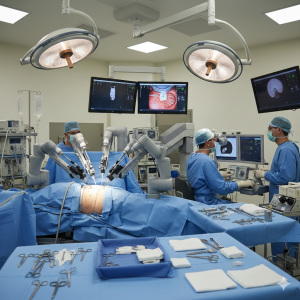 Robotic-assisted surgery has become he most exciting and transformative advancements for patients undergoing general surgical procedures. In NYC, robotic technology offers enhanced precision, reduced pain, and faster recovery compared to traditional open surgery. As innovation continues to evolve, robotic systems are redefining what’s possible in minimally invasive surgery.
This guide explores how robotic surgery works, the procedures commonly performed, and why it has become a preferred option for many patients and surgeons.
What Is Robotic-Assisted Surgery?
Robotic surgery is a form of minimally invasive surgery in which the surgeon controls robotic arms from a console. The system translates the surgeon’s hand movements into smaller, more precise motions inside the body.
Contrary to common misconception:
- The robot does not operate independently.
- The surgeon is in full control at all times.
- The system enhances, rather than replaces, surgical skill.
Robotic platforms provide high-definition 3D visualization and instruments with a greater range of motion than the human wrist.
How Robotic Surgery Works
During the procedure:
- Small incisions (typically 5–10 mm) are made.
- A tiny camera provides magnified, 3D images of the surgical site.
- Robotic arms hold specialized instruments.
- The surgeon operates from a nearby console with precise control.
This advanced visualization and dexterity allow for delicate dissection and accurate suturing.
Common General Surgical Procedures Performed Robotically
Robotic-assisted techniques are now widely used in general surgery for:
- Hernia repair (inguinal, ventral, incisional)
- Colon and rectal surgery
- Gallbladder removal (cholecystectomy)
- GERD and hiatal hernia repair
- Adrenal gland surgery
- Pancreatic and liver procedures
- Complex reoperations with scar tissue
Robotic systems are particularly beneficial for complex abdominal and pelvic procedures where precision is critical.
Key Benefits of Robotic Surgery
1. Greater Precision
- Enhanced dexterity beyond natural wrist movement
- Elimination of hand tremors
- Fine control for delicate structures
2. Improved Visualization
- High-definition, 3D magnified view
- Better identification of nerves and blood vessels
- Improved accuracy in tumor removal
3. Smaller Incisions
- Less tissue trauma
- Reduced postoperative pain
- Minimal scarring
4. Faster Recovery
- Shorter hospital stays
- Earlier return to work and daily activities
- Lower risk of infection
For busy NYC patients, quicker recovery can mean minimal disruption to professional and personal life.
Robotic Surgery vs. Traditional Laparoscopy
While both robotic and laparoscopic procedures are minimally invasive, robotic surgery offers distinct advantages in certain cases.
- Robotic surgery provides 3D visualization, while traditional laparoscopy typically offers 2D imaging.
- Robotic instruments allow greater range of motion.
- Complex suturing and reconstruction are often easier robotically.
However, not every case requires robotic assistance. An experienced surgeon will determine the best approach based on the patient’s condition.
Innovations Driving the Future of Robotic Surgery
Robotic systems continue to evolve rapidly. Recent innovations include:
- Fluorescence imaging to assess blood flow in real time
- Enhanced energy devices for precise vessel sealing
- Improved instrument flexibility and control
- Advanced ergonomic consoles reducing surgeon fatigue
These technological advancements are improving patient safety and expanding the range of procedures that can be performed minimally invasively.
Who Is a Candidate for Robotic Surgery?
Most patients undergoing general surgery are candidates for robotic procedures, especially those with:
- Hernias requiring complex repair
- Colon conditions needing precise dissection
- GERD or hiatal hernias
- Previous abdominal surgeries with scar tissue
Patients with severe infection, unstable medical conditions, or extensive disease may require alternative approaches.
Are There Risks?
Robotic surgery is considered very safe, but like any procedure, it carries potential risks:
- Bleeding
- Infection
- Injury to surrounding organs
- Anesthesia-related complications
These risks are minimized when surgery is performed by a highly trained and experienced robotic surgeon.
Conclusion: The Future of General Surgery Is Here
Robotic-assisted surgery represents a major leap forward in general surgical care. By combining surgical expertise with advanced technology, patients benefit from greater precision, less pain, and faster recovery. In a city like NYC—where access to cutting-edge medical care is essential—robotic surgery provides an advanced solution for a wide range of procedures.
If you are considering surgery, ask whether a robotic-assisted approach may be right for you. Modern innovation is making surgery safer, more efficient, and more comfortable than ever before.
Contact Information
LENOX HILL MINIMALLY INVASIVE SURGERY LLP
155 East 76th Street
New York, NY 10021
Tel: 646-846-1136
Email: lenoxhillsurgeons@gmail.com
Visit us online: https://www.lenoxhillminimallyinvasivesurgery.com