CALL TODAY 646-846-1136 | EMAIL


Esophageal Surgery for GERD and Reflux: Is a Fundoplication Right for You?
Esophageal surgery for GERD and reflux may be recommended when chronic acid reflux no longer responds to medications or lifestyle changes. Gastroesophageal reflux disease (GERD) affects millions of people and occurs when stomach acid frequently flows back into the esophagus, causing irritation and inflammation. While many patients manage GERD with medications such as proton pump inhibitors, others experience persistent symptoms that require surgical treatment. One of the most effective surgical procedures for GERD is fundoplication, which helps restore the normal barrier between the stomach and esophagus.
Understanding GERD and Chronic Acid Reflux
GERD develops when the lower esophageal sphincter (LES)—the muscular valve between the esophagus and stomach—becomes weak or relaxes inappropriately. This allows stomach acid to move upward into the esophagus.
Common symptoms of GERD include:
- Persistent heartburn or burning sensation in the chest
- Regurgitation of food or sour liquid
- Difficulty swallowing (dysphagia)
- Chronic cough or throat irritation
- Hoarseness or voice changes
- Chest discomfort after meals
Left untreated, chronic reflux can damage the lining of the esophagus and lead to complications such as esophagitis, strictures, or Barrett’s esophagus.
When Is Surgery Recommended for GERD?
Most GERD patients initially receive treatment through lifestyle changes and medications. However, surgery may be recommended in certain situations.
- Persistent symptoms despite long-term medication use
- Dependence on acid-reducing medications for symptom control
- Severe reflux causing inflammation or ulcers in the esophagus
- Complications such as Barrett’s esophagus
- Presence of a large hiatal hernia
- Patients who prefer a long-term surgical solution instead of lifelong medication
Surgical treatment can provide durable symptom relief and improve quality of life.
What Is Fundoplication Surgery?
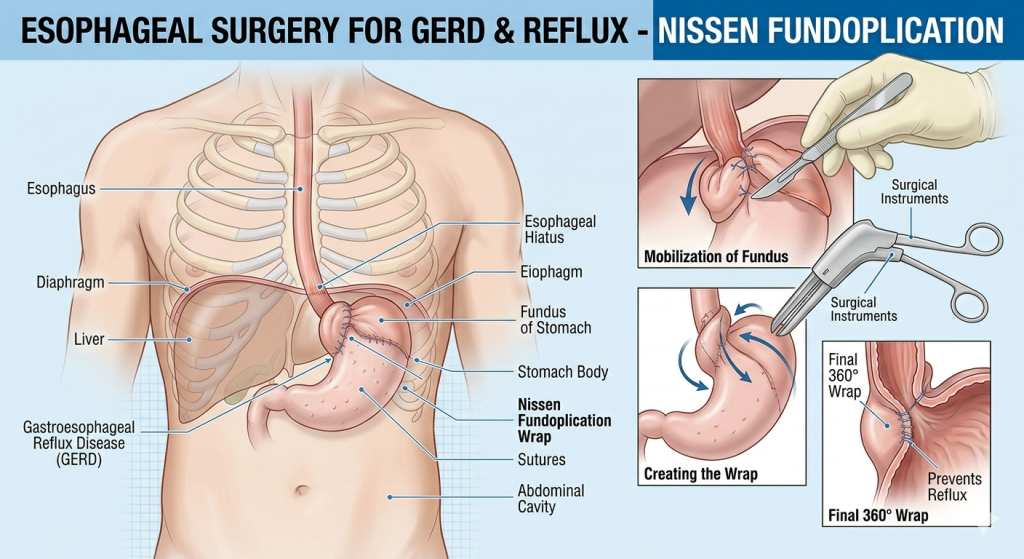
Fundoplication is the most common surgical procedure used to treat GERD. During this procedure, the upper portion of the stomach (the fundus) is wrapped around the lower end of the esophagus.
This wrap strengthens the lower esophageal sphincter and prevents stomach acid from flowing back into the esophagus.
Types of fundoplication procedures include:
- Nissen fundoplication: A complete 360-degree wrap around the esophagus
- Toupet fundoplication: A partial wrap used in select cases
- Dor fundoplication: Another partial wrap sometimes used with other esophageal procedures
Your surgeon will determine which technique is most appropriate based on your condition and anatomy.
Minimally Invasive Fundoplication
Today, most fundoplication procedures are performed using laparoscopic or robotic-assisted techniques.
During minimally invasive surgery:
- Several small incisions are made in the abdomen
- A camera provides high-definition visualization of the surgical area
- Specialized instruments are used to create the stomach wrap
Benefits of minimally invasive surgery include:
- Less postoperative pain
- Smaller scars
- Shorter hospital stays
- Faster return to daily activities
- Reduced risk of infection
These advantages make minimally invasive fundoplication a popular option for many patients in NYC.
How to Know If You Are a Candidate
Before recommending surgery, doctors typically perform several diagnostic tests to confirm GERD and evaluate esophageal function.
- Upper endoscopy: Allows visualization of inflammation or damage to the esophagus
- Esophageal pH monitoring: Measures acid exposure in the esophagus
- Esophageal manometry: Evaluates muscle function and swallowing
- Imaging studies: May identify hiatal hernias or structural abnormalities
These tests help ensure surgery will effectively relieve symptoms.
Recovery After Fundoplication Surgery
Recovery after minimally invasive fundoplication is usually relatively quick.
- Most patients stay in the hospital for one day or less
- A temporary soft or liquid diet is recommended
- Normal activities can often resume within 1–2 weeks
- Heavy lifting should be avoided for several weeks
Many patients experience significant improvement or complete resolution of reflux symptoms after surgery.
Potential Risks and Side Effects
Fundoplication surgery is generally very safe, but as with any operation, certain risks exist.
- Difficulty swallowing during early recovery
- Bloating or gas
- Infection or bleeding
- Rarely, recurrence of reflux symptoms
Most side effects improve as healing progresses.
Long-Term Results of GERD Surgery
For many patients, fundoplication provides long-term relief from reflux symptoms and eliminates the need for daily acid-reducing medications. Studies show that the majority of patients experience significant improvement in quality of life following surgery.
However, ongoing follow-up with your surgeon and gastroenterologist remains important for monitoring long-term digestive health.
Conclusion: When Surgery Can Provide Lasting Relief
Esophageal surgery for GERD and reflux offers an effective solution for patients whose symptoms cannot be controlled with medication alone. Fundoplication strengthens the natural barrier between the stomach and esophagus, helping prevent acid reflux and protect the esophagus from long-term damage.
With modern minimally invasive techniques, patients can achieve excellent results with shorter recovery times and minimal disruption to daily life.
Contact Information
LENOX HILL MINIMALLY INVASIVE SURGERY LLP
155 East 76th Street
New York, NY 10021
Tel: 646-846-1136
Email: lenoxhillsurgeons@gmail.com
Visit us online: https://www.lenoxhillminimallyinvasivesurgery.com