CALL TODAY 646-846-1136 | EMAIL


Umbilical and Incisional Hernias: When Is Surgery Necessary?
Hernias can develop in various parts of the abdominal wall, and two of the most frequently encountered types are umbilical hernias and incisional hernias. While both involve a bulge or protrusion of tissue through a weakened area in the abdominal muscles, their causes and treatment approaches differ. Understanding when surgery is necessary for these types of hernias is essential to prevent complications and ensure long-term health.
This guide will help you recognize the signs, understand the risks, and explore the surgical options available for umbilical and incisional hernias—especially using modern minimally invasive techniques.
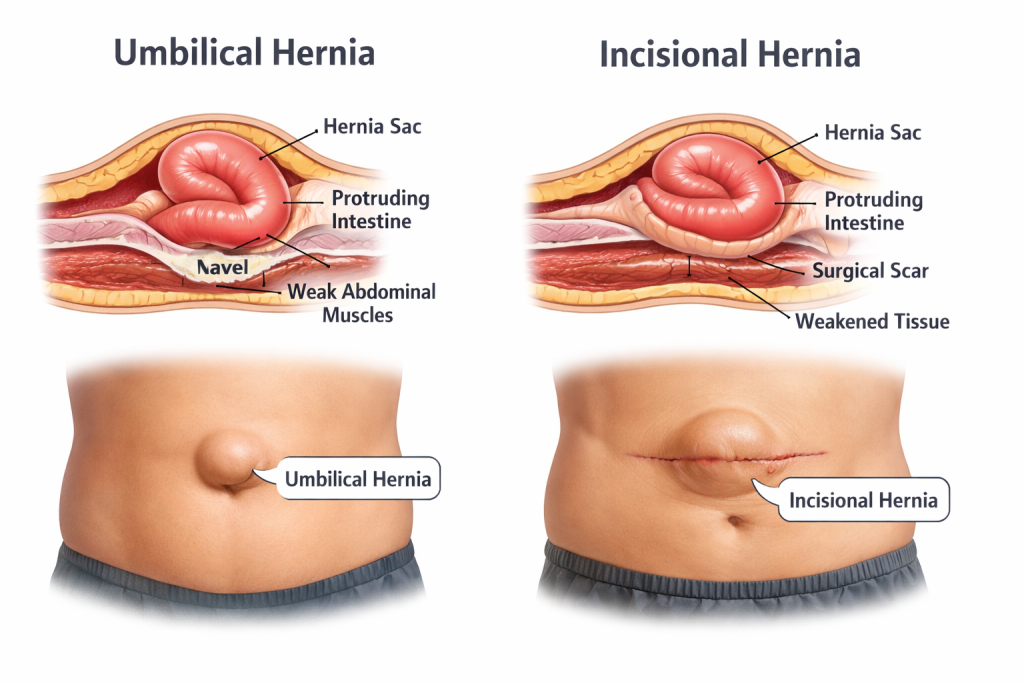
What Is an Umbilical Hernia?
An umbilical hernia occurs when part of the intestine or fatty tissue protrudes through the abdominal wall near the belly button (umbilicus). This type of hernia is common in infants but also affects adults, particularly women who have experienced multiple pregnancies or people who are overweight.
Common Causes:
- Congenital weakness in the abdominal wall
- Pregnancy or multiple pregnancies
- Obesity and weight gain
- Heavy lifting or straining
In adults, umbilical hernias are less likely to resolve on their own and often require surgical correction.
What Is an Incisional Hernia?
An incisional hernia develops at the site of a previous surgical incision where the abdominal wall hasn’t fully healed. This type of hernia can occur weeks, months, or even years after surgery.
Risk Factors:
- Infection or poor wound healing after initial surgery
- Obesity or excessive strain on the surgical site
- Multiple abdominal surgeries
- Smoking or chronic diseases that impair healing
Incisional hernias can become large and uncomfortable, often requiring surgical repair to restore function and prevent complications.
Signs and Symptoms of Both Hernia Types
Regardless of the type, umbilical and incisional hernias tend to present with similar symptoms:
- A visible bulge near the belly button or previous surgical site
- Pain or pressure, especially when lifting, bending, or coughing
- A feeling of weakness or heaviness in the abdominal wall
- Redness, swelling, or tenderness in the hernia area (especially if strangulated)
- Nausea or vomiting if intestinal obstruction is present
If the hernia cannot be pushed back in or causes severe pain and discoloration, this could indicate strangulation—a serious condition requiring emergency surgery.
When Is Surgery Necessary?
Not all hernias require immediate surgery, but several factors make surgical repair the best option:
- The hernia is growing or becoming more painful
- Daily activities are impacted by discomfort or pressure
- There’s a risk of incarceration (trapped tissue) or strangulation (cut-off blood supply)
- The hernia is irreducible (cannot be pushed back in)
- Cosmetic or lifestyle concerns motivate the patient to seek repair
In adults, umbilical hernias rarely close on their own. Similarly, incisional hernias do not improve without intervention and often worsen over time.
Surgical Options: Open vs. Minimally Invasive Repair
There are two primary surgical techniques for repairing umbilical and incisional hernias:
1. Open Hernia Repair
- Traditional approach with a single incision over the hernia site
- Surgeon returns the protruding tissue to the abdomen and closes the defect, often using mesh for reinforcement
- May be recommended for large or complex hernias
2. Laparoscopic or Robotic-Assisted Hernia Repair
- Minimally invasive approach using several small incisions and a camera
- Surgeon places mesh from the inside to reinforce the abdominal wall
- Offers faster recovery, less post-operative pain, and lower infection risk
Your surgeon will recommend the best approach based on the hernia’s size, location, your medical history, and lifestyle.
Recovery After Surgery
Most patients return home the same day, especially with laparoscopic surgery. Recovery tips include:
- Avoid lifting heavy objects for at least 4–6 weeks
- Follow a high-fiber diet to prevent straining during bowel movements
- Monitor for signs of infection or recurrence
- Gradually increase activity as advised by your surgeon
Follow-up visits are essential to monitor healing and ensure the hernia repair is successful.
Conclusion: Don’t Delay Hernia Evaluation
Umbilical and incisional hernias can seem minor at first but tend to worsen over time. If you’re experiencing bulging, discomfort, or pressure in your abdominal area, it’s important to seek a professional evaluation. Minimally invasive surgical techniques make hernia repair safer and more efficient than ever, with less downtime and improved outcomes.
Contact Information
LENOX HILL MINIMALLY INVASIVE SURGERY LLP
155 East 76th Street
New York, NY 10021
Tel: 646-846-1136
Email: lenoxhillsurgeons@gmail.com