CALL TODAY 646-846-1136 | EMAIL


Laparoscopic Hernia Repair in NYC: What Patients Should Expect
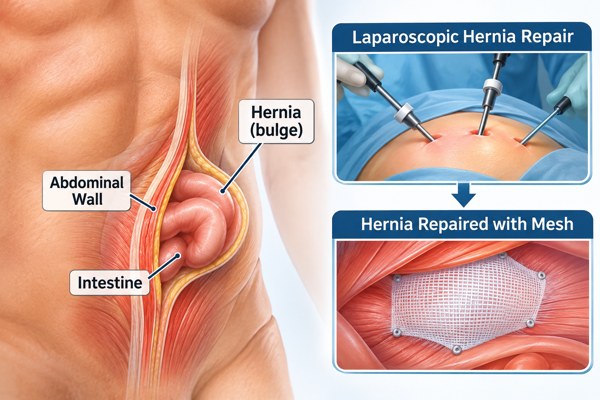
Laparoscopic hernia repair in NYC is a minimally invasive surgical procedure used to treat certain types of hernias through small abdominal incisions rather than one large incision. Hernias occur when an internal organ or fatty tissue pushes through a weakened area of muscle or connective tissue, often creating a noticeable bulge and discomfort. Although some hernias cause few symptoms, others gradually enlarge or lead to complications that require surgical treatment.
For patients considering hernia surgery in Manhattan or the surrounding New York area, understanding how laparoscopic hernia repair works, who may benefit from it, and what recovery involves can make the treatment process easier to navigate.
What Is a Hernia and Why Does It Develop?
A hernia develops when tissue protrudes through a weak spot in the abdominal wall or another supporting structure. Hernias may be present at birth or develop later in life due to changes in muscle strength, previous surgery, or increased pressure inside the abdomen.
Common contributing factors include aging, obesity, chronic coughing, constipation, heavy lifting, and previous abdominal operations. However, hernias can also develop in otherwise healthy individuals without an obvious cause.
Patients may notice a bulge that becomes more visible when standing, coughing, or straining. Some experience aching, pressure, or discomfort during physical activity, while others have no significant symptoms.
Hernias generally do not repair themselves. Although not every hernia requires immediate surgery, an evaluation by a qualified surgeon can help determine whether observation or surgical repair is appropriate.
Types of Hernias Treated With Laparoscopic Surgery
Laparoscopic techniques can be used to repair several common abdominal wall hernias. The most appropriate approach depends on the location, size, complexity, and patient’s surgical history.
- Inguinal hernias: Occur in the groin and are among the most common types of hernias treated surgically.
- Femoral hernias: Develop near the upper thigh and groin and carry a relatively higher risk of complications involving trapped bowel.
- Umbilical hernias: Occur near the belly button and may develop or enlarge during adulthood.
- Incisional hernias: Form through weakened tissue at the site of a previous abdominal surgical incision.
- Ventral hernias: Develop along the front abdominal wall and may involve different areas of weakened tissue.
Some hernias are better suited to open repair, particularly when the anatomy is complex or certain medical conditions increase the risks of minimally invasive surgery.
How Does Laparoscopic Hernia Repair Work?
Laparoscopic hernia repair uses a small camera called a laparoscope and specialized surgical instruments inserted through small incisions.
The camera transmits magnified images to a monitor, allowing the surgeon to identify the hernia defect and surrounding structures.
During many laparoscopic repairs, the surgeon carefully returns protruding tissue to its normal position and reinforces the weakened area of the abdominal wall. Surgical mesh is frequently used to provide additional support and reduce the likelihood of recurrence.
For inguinal hernias, two commonly used laparoscopic techniques are transabdominal preperitoneal repair (TAPP) and totally extraperitoneal repair (TEP). Both approaches position mesh in the space behind the abdominal wall, although they access that space differently.
The technique selected depends on the patient’s anatomy, previous operations, and the surgeon’s assessment.
Benefits of Minimally Invasive Hernia Surgery
Laparoscopic hernia repair offers several potential advantages over traditional open surgery for appropriately selected patients.
Because the procedure uses smaller incisions, patients may experience less postoperative wound discomfort and return to certain activities sooner.
Laparoscopic surgery can also be particularly useful for patients with bilateral inguinal hernias, allowing both sides to be repaired during the same operation.
Another potential advantage is the ability to repair certain recurrent groin hernias through a different tissue plane than a previous open operation.
However, laparoscopic surgery is not automatically superior for every patient. Open hernia repair remains an effective treatment, and the choice should consider the type of hernia, patient characteristics, surgical expertise, and potential complications.
When Is Hernia Surgery Necessary?
The decision to undergo hernia repair depends on symptoms, hernia characteristics, and the risk of future complications.
Patients experiencing persistent pain, an enlarging bulge, or limitations in daily activities may benefit from elective surgical repair.
Some men with minimally symptomatic inguinal hernias may be candidates for watchful waiting after discussing the risks and benefits with their surgeon. However, many eventually choose surgery because symptoms increase over time.

Femoral hernias generally warrant more prompt surgical consideration because they have a greater tendency to become trapped.
A hernia that suddenly becomes extremely painful, cannot be pushed back into place, or is accompanied by vomiting, abdominal swelling, or skin discoloration may indicate incarceration or strangulation.
These symptoms require immediate emergency medical evaluation because compromised blood flow to trapped intestinal tissue can become life-threatening.
Preparing for Laparoscopic Hernia Repair in NYC
Before surgery, patients undergo a medical evaluation to confirm the diagnosis and identify factors that could affect treatment.
Your surgeon will review your symptoms, medical history, previous abdominal operations, medications, and overall health.
In many cases, a physical examination is sufficient to diagnose a hernia. Ultrasound, CT imaging, or MRI may be recommended when the diagnosis is uncertain or the hernia is complex.
Patients should inform their surgical team about blood thinners, diabetes medications, allergies, and any previous complications involving anesthesia.
Smoking cessation, appropriate nutrition, and management of chronic medical conditions may help improve surgical outcomes.
Your surgical team will also provide instructions about fasting, medication adjustments, transportation, and the expected recovery period.
What Happens on the Day of Hernia Surgery?
Most laparoscopic hernia repairs are performed under general anesthesia, meaning the patient remains asleep throughout the operation.
After anesthesia is administered, the surgeon creates several small incisions and introduces the laparoscope and surgical instruments.
The hernia is identified, protruding tissue is repositioned when necessary, and the weakened area is repaired. Mesh is commonly positioned to reinforce the abdominal wall.
The incisions are then closed using sutures, surgical adhesive, or other appropriate techniques.
The length of surgery varies depending on whether the hernia is unilateral or bilateral, its size, and whether additional complications are present.
Following the operation, patients are monitored in a recovery area while the effects of anesthesia wear off.
Many uncomplicated laparoscopic hernia repairs are performed on an outpatient basis, allowing patients to return home the same day.
Recovery After Laparoscopic Hernia Repair
Recovery after laparoscopic hernia surgery varies depending on the type of hernia, the extent of the repair, and the patient’s overall health.
Mild abdominal discomfort, bruising, swelling, and soreness near the incision sites are common during the first several days.
Some patients also experience temporary shoulder discomfort related to the gas used during laparoscopic surgery.
Walking is usually encouraged soon after the procedure because gentle movement supports circulation and helps prevent complications.
Many patients can resume light daily activities within several days, although returning to physically demanding work may require additional time.
Heavy lifting and strenuous exercise should be resumed according to the surgeon’s instructions. Restrictions vary depending on the repair, and patients should not assume that every hernia operation requires the same recovery period.
Potential Risks and Complications of Hernia Repair
Although laparoscopic hernia repair is generally safe when performed on appropriately selected patients, every surgical procedure carries potential risks.
Possible complications include bleeding, infection, fluid collections, injury to surrounding structures, blood clots, and reactions to anesthesia.
Some patients experience temporary numbness, discomfort, or swelling in the groin or abdominal wall.
Chronic postoperative pain is another recognized complication of hernia repair, particularly after inguinal hernia surgery. While many patients recover without persistent symptoms, long-term discomfort can occur following either open or laparoscopic procedures.
Hernia recurrence is also possible, even when mesh reinforcement is used.
Discussing these risks before surgery helps patients understand the potential benefits and limitations of each surgical approach.
Is Surgical Mesh Safe for Hernia Repair?
Surgical mesh is widely used in hernia repair because it reinforces weakened tissue and can reduce recurrence compared with certain non-mesh repairs.
Mesh materials and designs vary, and the choice depends on the location and characteristics of the hernia.
Although most patients do not experience serious mesh-related complications, problems such as infection, chronic pain, migration, or recurrence can occur.
Some patients may be candidates for tissue-based repair without mesh, depending on their circumstances and the surgeon’s expertise.
The decision to use mesh should be based on an individualized discussion of the available techniques, expected benefits, and potential risks.
Can a Hernia Return After Laparoscopic Surgery?
Hernia recurrence can occur following any type of surgical repair, although modern techniques have reduced recurrence rates for many patients.
Factors that may contribute to recurrence include smoking, obesity, chronic coughing, poor wound healing, and increased pressure on the abdominal wall.
The original hernia’s size, the quality of surrounding tissue, and the surgical technique also influence long-term outcomes.
Patients can support recovery by following postoperative instructions, managing chronic medical conditions, and gradually returning to physical activity.
Maintaining a healthy weight and avoiding tobacco may also help reduce the risk of future abdominal wall problems.
Choosing a Laparoscopic Hernia Surgeon in Manhattan
Selecting an experienced surgeon is an important part of planning hernia treatment.
Patients should consider the surgeon’s experience with their specific hernia type, familiarity with minimally invasive techniques, and ability to explain the advantages and disadvantages of different repair methods.
It is also helpful to ask whether mesh will be used, what complications are possible, and how long recovery is expected to take.
For patients with recurrent or complex abdominal wall hernias, specialized surgical experience may be especially valuable.
A thorough consultation should provide enough information for patients to make an informed decision without feeling pressured into a particular procedure.
Advanced Hernia Repair Options for NYC Patients
Laparoscopic hernia repair in NYC provides an effective minimally invasive option for many patients with inguinal, umbilical, ventral, and certain incisional hernias.
By using small incisions and specialized instruments, surgeons can repair weakened abdominal tissue while potentially reducing postoperative discomfort and recovery time.
However, successful treatment depends on selecting the appropriate procedure for each patient’s condition. Some hernias can be monitored, while others require timely surgery to prevent complications.
If you are experiencing hernia symptoms or have been diagnosed with an abdominal wall hernia, Dr. Valery Dronsky at Lenox Hill Minimally Invasive Surgery PLLC offers surgical consultations in Manhattan. Contact the practice to discuss your diagnosis, learn about available hernia repair techniques, and determine whether laparoscopic surgery may be appropriate for your needs.
LENOX HILL MINIMALLY INVASIVE SURGERY PLLC
Dr. Valery Dronsky
117 E 77th Street
New York, NY 10075
646-846-1136
admin@lenoxmis.com
https://www.lenoxhillminimallyinvasivesurgery.com