CALL TODAY 646-846-1136 | EMAIL



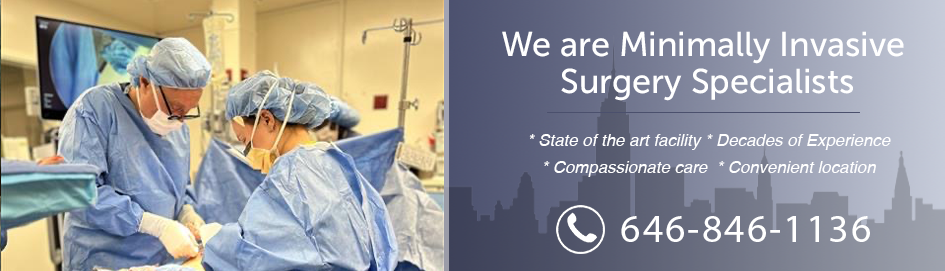
Surgical Experts Dedicated to Improving Lives
At Lenox Hill Minimally Invasive Surgery PLLC, Dr. Valery Dronsky and his staff of medical professionals provide compassionate care with the highest ethical & professional standards. In our state of the art facility, we offer surgical services using only the most cutting edge and current procedures and treatments. We specialize in general surgery, including extensive experience in performing hernia repair surgery. Our expertise is in minimally invasive surgery and robotic surgery. Minimally invasive and robotic surgery often allow patients to experience easier recovery than traditional open surgery. They also allow for more precise and less traumatic surgery. When robotic and minimally invasive surgery is not an option, we are also skilled and experienced in traditional open surgical procedures.
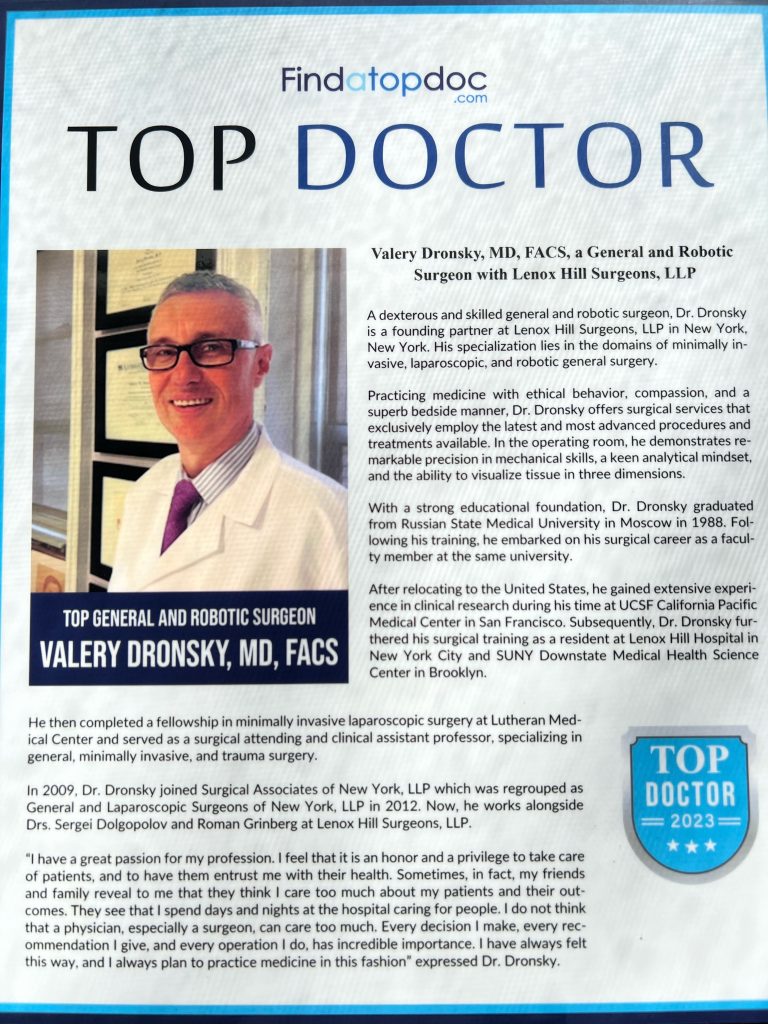
Dr. Dronsky is an experienced and highly skilled surgeon having undergone extensive training in school, residency and fellowships. He practices medicine with ethical behavior, compassion and superb bedside manner. In the operating room he exhibits precision mechanical abilities, analytical thinking and the ability to visualize tissue in three dimensions. These innate and learned skills allow Dr. Dronsky to be one of the most dexterous and skilled professionals in New York City and the Country.
Call us: 646-846-1136












PATIENT TESTIMONIALS
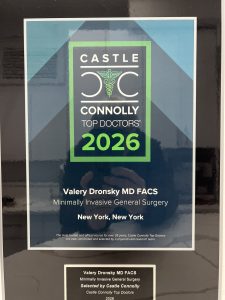
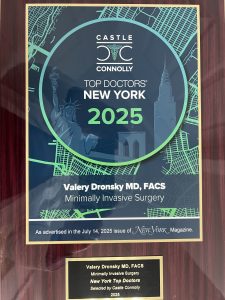
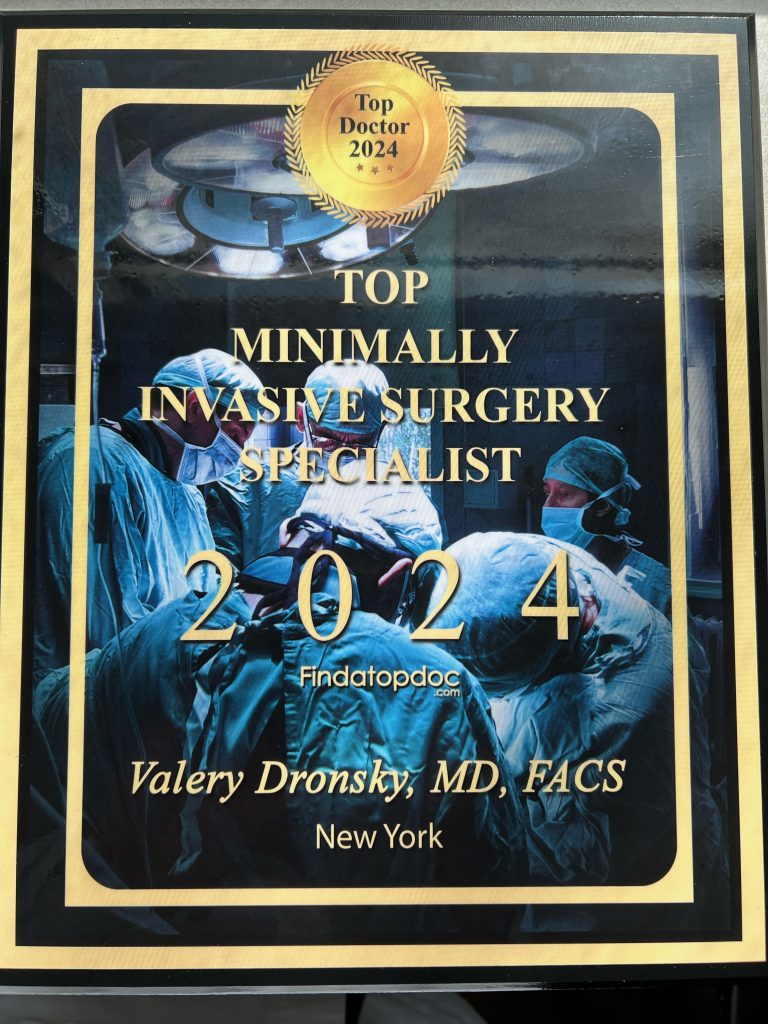
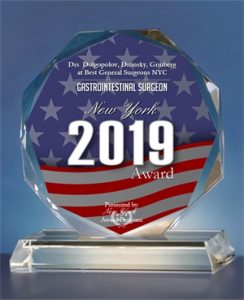
Recent Awards
We are honored and deeply appreciative to have consistently received prestigious awards and recognition year after year, establishing us as one of New York’s foremost hospitals for a wide range of general surgeries, safety measures, specialized procedures, and overall excellence in healthcare. At Lenox Hill Minimally Invasive Surgery, our unwavering commitment lies in delivering exceptional care and unwavering support to our patients, guaranteeing their safety and successful recovery throughout their entire surgical experience.
Hospital Quality Awards
 America’s 50 Best Hospitals Award™ (2023, 2022)
Top 1% in the nation for providing the highest clinical quality year over year.

America’s 100 Best Hospitals Award™ (2021)
Top 2% in the nation for consistently delivering clinical quality year over year.

America’s 250 Best Hospitals Award™ (2023, 2022, 2021)
Top 5% in the nation for consistently delivering clinical quality.

Patient Safety Excellence Award™ (2023, 2022)
Top in the nation for providing excellence in patient safety by preventing infections, medical errors, and other preventable complications.
Specialty Clinical Quality Awards

America’s 100 Best Hospitals for Cardiac Care Award™ (2023, 2022, 2021, 2020, 2019)
Superior clinical outcomes in heart bypass surgery, coronary interventional procedures, heart attack treatment, heart failure treatment, and heart valve surgery.

America’s 100 Best Hospitals for Coronary Intervention Award™ (2023, 2022, 2021, 2020, 2019)
Superior clinical outcomes in coronary intervention procedures (angioplasty with stent).

America’s 100 Best Hospitals for Prostate Surgery Award™ (2023, 2022, 2021)
Superior clinical outcomes in prostate removal surgery and transurethral resection of the prostate.
Click to see all of our Healthgrades best doctors awards

Visit our main website at www.LenoxHillMinimallyInvasiveSurgery.com
Blog Posts are Below:
Monthly Archives: October 2025
Colon Surgery for Diverticulitis and Cancer: What to Expect
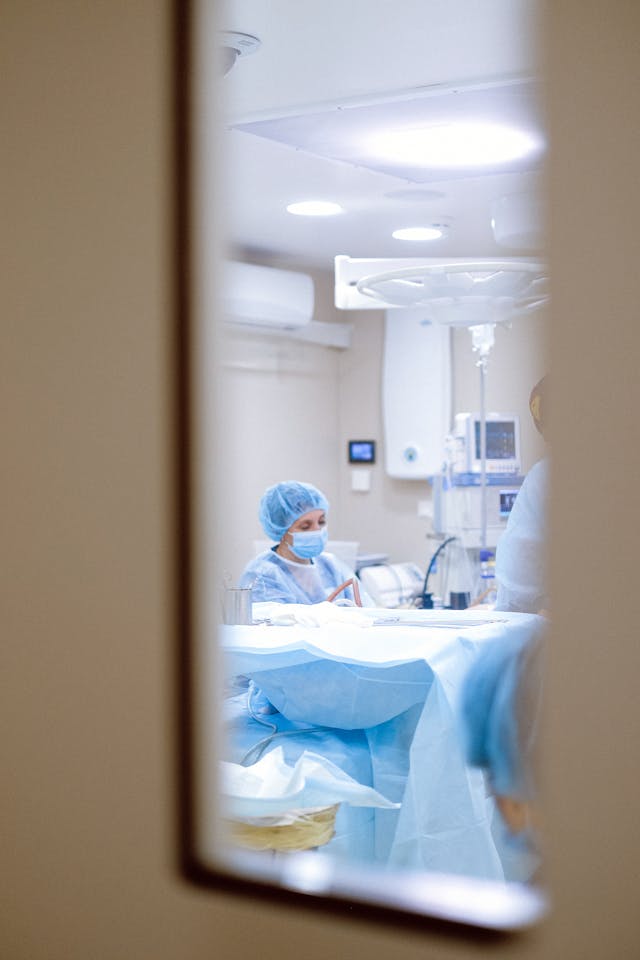 Colon surgery is often recommended for patients suffering from recurrent diverticulitis or colon cancer. While the idea of colon surgery may feel overwhelming, modern minimally invasive techniques have made these procedures safer, more precise, and associated with faster recovery times. If you’ve been advised to undergo colon surgery in NYC, understanding what to expect can help you feel more confident and prepared.
This guide explains why colon surgery is performed, what the procedure involves, and how recovery typically progresses.
Understanding Diverticulitis and Colon Cancer
The colon (large intestine) plays a vital role in absorbing water and processing waste. When disease affects this organ, surgical intervention may be necessary.
Diverticulitis
Diverticulitis occurs when small pouches (diverticula) in the colon wall become inflamed or infected. While mild cases can be treated with antibiotics, surgery may be recommended if:
- You experience recurrent episodes
- Complications such as abscess, perforation, or fistula develop
- There is persistent pain or narrowing of the colon
Colon Cancer
Colon cancer develops when abnormal cells grow in the lining of the colon. Surgery is often the primary treatment, especially in early and mid-stage disease.
- Removal of the cancerous segment improves survival rates
- Lymph nodes are often removed for staging
- Surgery may be combined with chemotherapy depending on stage
Early detection through colonoscopy significantly improves outcomes.
What Is Colon Surgery?
Colon surgery, also known as colectomy or colon resection, involves removing the diseased portion of the colon and reconnecting the healthy ends.
There are different types of colon surgery depending on the location and severity of disease:
- Partial colectomy (removal of a segment of the colon)
- Right or left hemicolectomy (removal of one side of the colon)
- Sigmoid colectomy (commonly performed for diverticulitis)
- Total colectomy (removal of the entire colon, in rare cases)
Minimally Invasive Colon Surgery
In most cases today, colon surgery can be performed using laparoscopic or robotic-assisted techniques.
How It Works:
- Several small incisions are made in the abdomen
- A high-definition camera guides the surgeon
- The diseased portion of the colon is removed
- The healthy sections are reconnected (anastomosis)
Benefits:
- Smaller incisions and less scarring
- Reduced postoperative pain
- Shorter hospital stays
- Faster return to normal activities
- Lower risk of infection
Robotic surgery may provide additional precision, particularly in complex cancer cases.
Will I Need a Colostomy Bag?
One of the most common concerns patients have is whether they will need a colostomy (an opening in the abdomen for stool to exit into a bag).
- In most elective surgeries, reconnection is possible and no colostomy is needed.
- Temporary colostomies may be required in emergency situations or complicated infections.
- Permanent colostomies are uncommon and typically reserved for specific cancer cases.
Your surgeon will discuss this possibility with you before surgery.
Preparing for Colon Surgery
Before surgery, you may need:
- Bowel preparation (cleansing the colon)
- Blood tests and imaging
- Medication adjustments
- Preoperative consultation and clearance
Proper preparation helps reduce complications and supports smoother recovery.
What to Expect After Surgery
Hospital Stay
- Typically 2–5 days for minimally invasive surgery
- Longer stays may be needed for complicated cases
Recovery Timeline
- Walking is encouraged within 24 hours
- Diet progresses from liquids to solid foods gradually
- Return to work typically within 2–4 weeks
- Avoid heavy lifting for 4–6 weeks
Mild bloating, fatigue, and temporary bowel habit changes are common during early recovery.
Risks and Complications
Colon surgery is generally safe, but potential risks include:
- Infection
- Bleeding
- Anastomotic leak (rare but serious)
- Blood clots
- Bowel obstruction
Choosing an experienced minimally invasive surgeon significantly reduces these risks.
Long-Term Outlook
For diverticulitis patients, surgery often eliminates recurrent infections and dramatically improves quality of life.
For colon cancer patients, surgical removal of the tumor offers the best chance for cure, particularly when detected early. Follow-up care may include:
- Regular colonoscopies
- Imaging scans
- Blood work
- Oncology consultations if needed
Conclusion: Modern Colon Surgery Offers Hope and Healing
Colon surgery for diverticulitis and cancer has advanced significantly, offering safer procedures and quicker recovery thanks to minimally invasive techniques. If you are experiencing recurrent diverticulitis or have been diagnosed with colon cancer, timely surgical consultation can provide clarity and effective treatment options.
Contact Information
LENOX HILL MINIMALLY INVASIVE SURGERY PLLC
Dr. Valery Dronsky
117 E 77th Street
New York, NY 10075
646-846-1136
admin@lenoxmis.com
Visit us online:
https://www.lenoxhillminimallyinvasivesurgery.com
Minimally Invasive Surgery in NYC: Faster Recovery, Less Pain
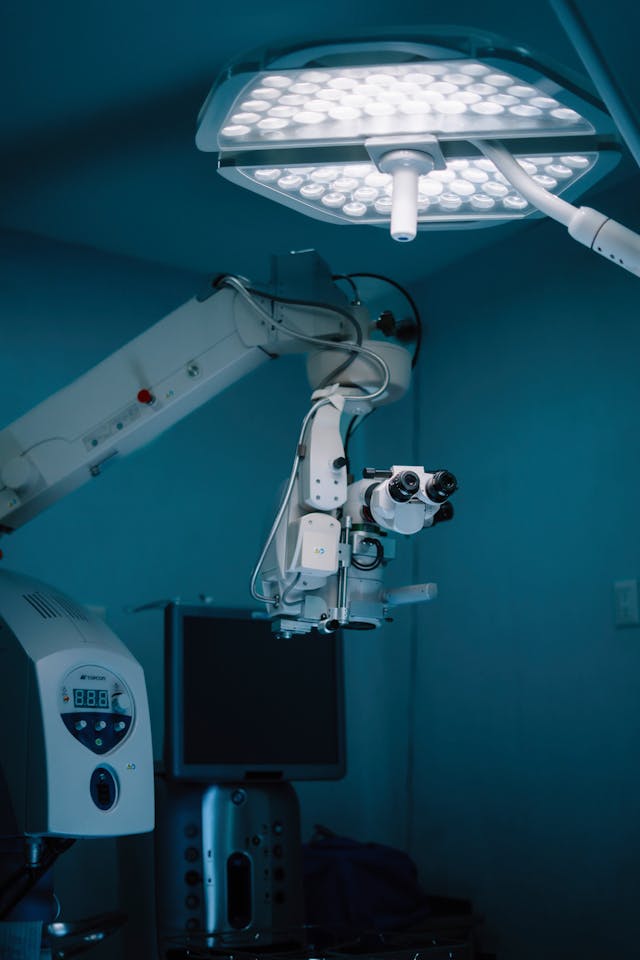 Minimally invasive surgery in large cities like NYC has revolutionized the way many common and complex procedures are performed. For patients in New York City, where busy schedules and active lifestyles are the norm, choosing a surgical approach that allows for faster recovery and less pain is often a top priority. Thanks to advances in laparoscopic and robotic-assisted techniques, minimally invasive surgery (MIS) offers safer, more efficient solutions for a wide range of general surgical conditions.
This guide explains how minimally invasive surgery works, its benefits, and why it has become the preferred option for many patients in NYC.
What Is Minimally Invasive Surgery?
Minimally invasive surgery refers to procedures performed through small incisions using specialized instruments and high-definition cameras. Instead of making a large incision as in traditional open surgery, surgeons use tools such as laparoscopes or robotic systems to operate with precision while minimizing trauma to surrounding tissues.
Common minimally invasive techniques include:
- Laparoscopic surgery
- Robotic-assisted surgery
- Single-incision laparoscopic surgery (SILS)
- Advanced endoscopic procedures
These approaches are now widely used across general surgery, offering patients significant advantages over conventional methods.
Key Benefits: Faster Recovery and Less Pain
The primary reasons patients choose minimally invasive surgery are the reduced recovery time and lower levels of postoperative discomfort.
- Smaller incisions: Less tissue damage leads to decreased pain and quicker healing.
- Shorter hospital stays: Many procedures are outpatient or require only overnight observation.
- Reduced need for pain medication: Patients often require fewer narcotics after surgery.
- Faster return to normal activities: Many individuals resume work and daily routines within 1–2 weeks.
- Lower risk of infection: Smaller wounds decrease the likelihood of surgical site infections.
- Minimal scarring: Cosmetic outcomes are significantly improved.
For NYC residents balancing work, commuting, and family life, this accelerated recovery can make a substantial difference.
Conditions Commonly Treated with Minimally Invasive Surgery
Minimally invasive techniques are used to treat many of the most common general surgical conditions.
- Hernias (inguinal, umbilical, ventral, incisional)
- Gallbladder disease and gallstones
- Appendicitis
- Colon and small intestine disorders
- GERD and hiatal hernias
- Adrenal gland tumors
- Liver and pancreatic conditions
- Soft tissue masses and skin lesions
In most cases, patients experience fewer complications and shorter recovery periods compared to traditional open surgery.
Laparoscopic vs. Robotic Surgery
Both laparoscopic and robotic-assisted procedures fall under the umbrella of minimally invasive surgery, but they offer slightly different advantages.
Laparoscopic Surgery
- Uses small incisions and a camera to guide surgical instruments
- Well-established and widely used
- Effective for most routine procedures
Robotic-Assisted Surgery
- Provides enhanced 3D visualization
- Allows for greater precision and dexterity
- Particularly beneficial for complex or delicate operations
Your surgeon will determine which approach is best based on your specific condition and overall health.
What to Expect Before and After Surgery
Before surgery, you will undergo a thorough evaluation including imaging, lab tests, and a consultation to determine your candidacy for a minimally invasive approach.
After surgery:
- You may go home the same day
- Mild soreness or bloating is common
- Light activity is encouraged within days
- Heavy lifting is typically restricted for several weeks
Most patients are surprised by how quickly they regain energy and mobility.
Is Minimally Invasive Surgery Right for You?
While most patients are candidates for minimally invasive surgery, certain factors may influence the decision:
- Previous abdominal surgeries causing scar tissue
- Severe infection or inflammation
- Complex anatomy or advanced disease
- Underlying medical conditions
An experienced surgeon will evaluate your individual situation to determine the safest and most effective treatment plan.
Why NYC Patients Prefer Minimally Invasive Surgery
Living in NYC means balancing demanding careers, family commitments, and an active lifestyle. Minimally invasive surgery allows patients to:
- Return to work sooner
- Avoid prolonged hospital stays
- Minimize disruption to daily routines
- Heal comfortably and discreetly
Access to advanced surgical technology and experienced specialists makes NYC one of the best places to undergo minimally invasive procedures.
Conclusion: Advanced Care with Faster Healing
Minimally invasive surgery represents the future of general surgical care. With faster recovery, less pain, and lower complication rates, it has become the preferred option for many procedures. If you’re facing surgery, exploring minimally invasive options could significantly improve your experience and outcome.
Contact Information
LENOX HILL MINIMALLY INVASIVE SURGERY PLLC
Dr. Valery Dronsky
117 E 77th Street
New York, NY 10075
646-846-1136
admin@lenoxmis.com
Visit us online: https://www.lenoxhillminimallyinvasivesurgery.com