CALL TODAY 646-846-1136 | EMAIL



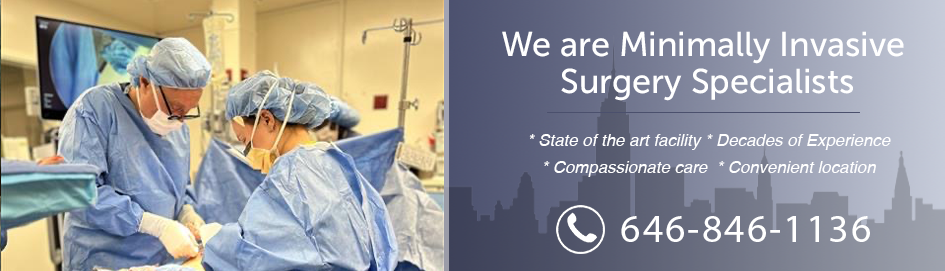
Surgical Experts Dedicated to Improving Lives
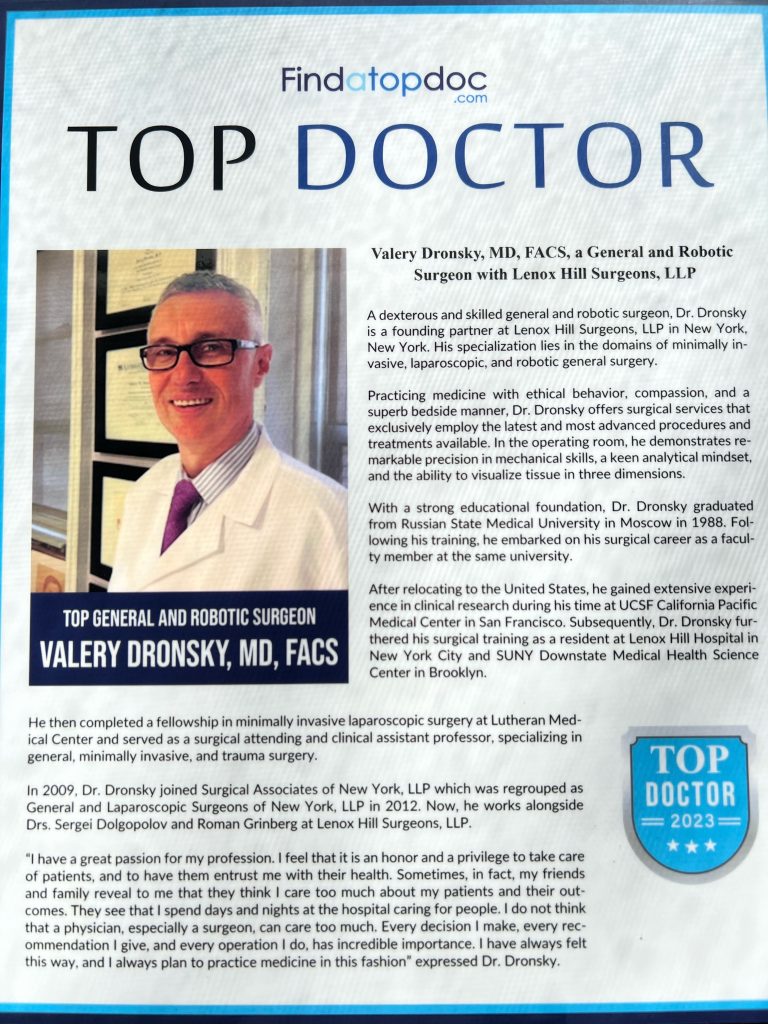
At Lenox Hill Minimally Invasive Surgery PLLC, Dr. Valery Dronsky and his staff of medical professionals provide compassionate care with the highest ethical & professional standards. In our state of the art facility, we offer surgical services using only the most cutting edge and current procedures and treatments. We specialize in general surgery, including extensive experience in performing hernia repair surgery. Our expertise is in minimally invasive surgery and robotic surgery. Minimally invasive and robotic surgery often allow patients to experience easier recovery than traditional open surgery. They also allow for more precise and less traumatic surgery. When robotic and minimally invasive surgery is not an option, we are also skilled and experienced in traditional open surgical procedures.
Dr. Dronsky is an experienced and highly skilled surgeon having undergone extensive training in school, residency and fellowships. He practices medicine with ethical behavior, compassion and superb bedside manner. In the operating room he exhibits precision mechanical abilities, analytical thinking and the ability to visualize tissue in three dimensions. These innate and learned skills allow Dr. Dronsky to be one of the most dexterous and skilled professionals in New York City and the Country.
Call us: 646-846-1136












PATIENT TESTIMONIALS
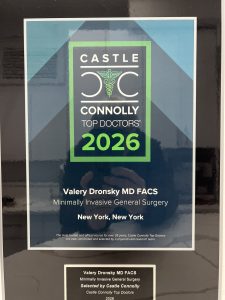
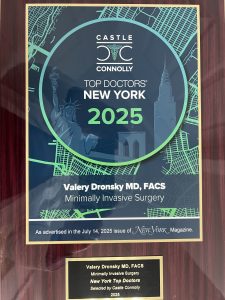
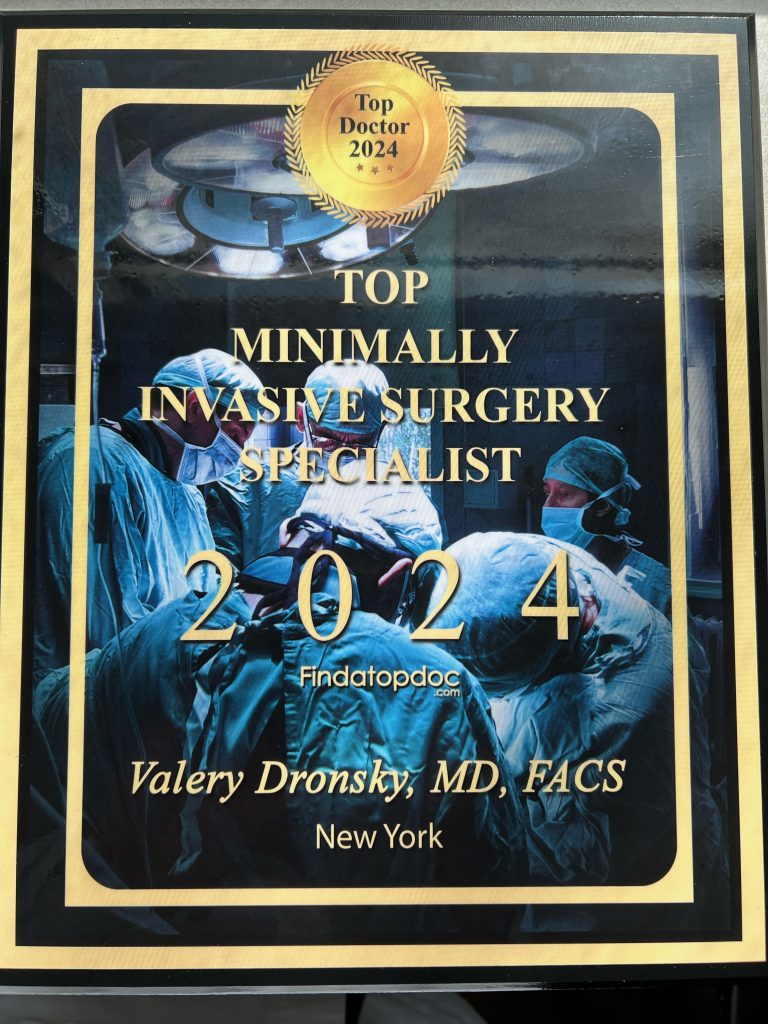
Recent Awards
We are honored and deeply appreciative to have consistently received prestigious awards and recognition year after year, establishing us as one of New York’s foremost hospitals for a wide range of general surgeries, safety measures, specialized procedures, and overall excellence in healthcare. At Lenox Hill Minimally Invasive Surgery, our unwavering commitment lies in delivering exceptional care and unwavering support to our patients, guaranteeing their safety and successful recovery throughout their entire surgical experience.
Hospital Quality Awards
 America’s 50 Best Hospitals Award™ (2023, 2022)
Top 1% in the nation for providing the highest clinical quality year over year.

America’s 100 Best Hospitals Award™ (2021)
Top 2% in the nation for consistently delivering clinical quality year over year.

America’s 250 Best Hospitals Award™ (2023, 2022, 2021)
Top 5% in the nation for consistently delivering clinical quality.

Patient Safety Excellence Award™ (2023, 2022)
Top in the nation for providing excellence in patient safety by preventing infections, medical errors, and other preventable complications.
Specialty Clinical Quality Awards

America’s 100 Best Hospitals for Cardiac Care Award™ (2023, 2022, 2021, 2020, 2019)
Superior clinical outcomes in heart bypass surgery, coronary interventional procedures, heart attack treatment, heart failure treatment, and heart valve surgery.

America’s 100 Best Hospitals for Coronary Intervention Award™ (2023, 2022, 2021, 2020, 2019)
Superior clinical outcomes in coronary intervention procedures (angioplasty with stent).

America’s 100 Best Hospitals for Prostate Surgery Award™ (2023, 2022, 2021)
Superior clinical outcomes in prostate removal surgery and transurethral resection of the prostate.
Click to see all of our Healthgrades best doctors awards


Visit our main website at www.LenoxHillMinimallyInvasiveSurgery.com
Blog Posts are Below:
Monthly Archives: November 2025
Liver Resection and Tumor Removal: Modern Surgical Techniques in NYC
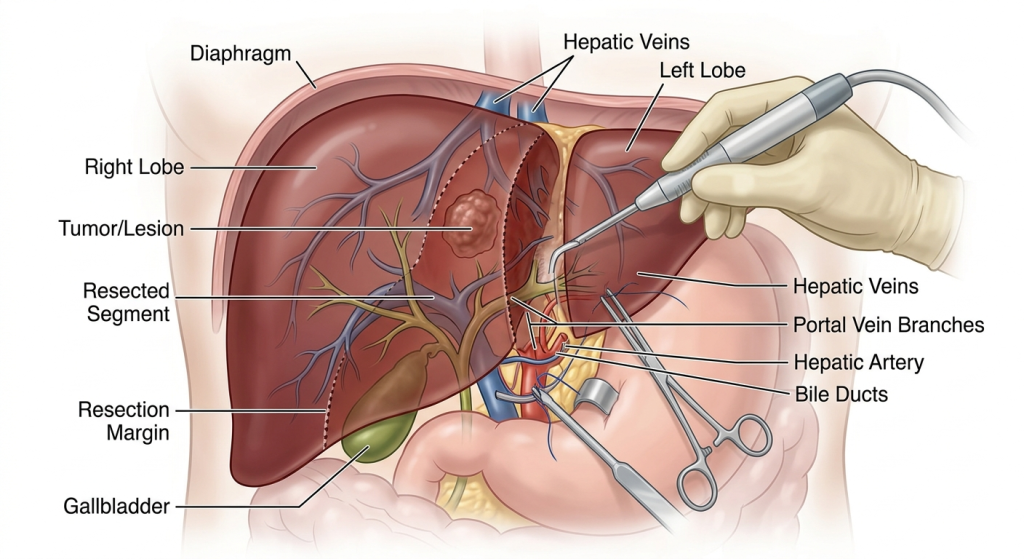
Liver Resection and Tumor Removal has advanced dramatically over the past two decades, allowing surgeons to treat complex liver diseases with greater precision and improved patient outcomes. One of the most common procedures used to treat liver tumors is liver resection, a surgery in which a portion of the liver containing a tumor is removed. Thanks to modern surgical techniques—including minimally invasive and robotic-assisted procedures—patients in NYC now have access to safer operations, faster recovery times, and better long-term results.
This guide explains what liver resection involves, when it is recommended, and how advanced surgical approaches are improving treatment outcomes.
Understanding Liver Tumors
The liver is one of the largest and most vital organs in the body. It plays an essential role in detoxifying the blood, producing bile for digestion, storing nutrients, and regulating metabolism. When tumors develop in the liver, they can interfere with these important functions.
Liver tumors may be benign (noncancerous) or malignant (cancerous).
- Primary liver cancer: Cancer that begins in the liver, such as hepatocellular carcinoma.
- Metastatic liver tumors: Cancer that spreads to the liver from another organ, most commonly the colon.
- Benign tumors: Such as hemangiomas or adenomas, which may still require removal if they cause symptoms.
Early diagnosis and treatment are critical for achieving the best possible outcomes.
What Is Liver Resection?
Liver resection is a surgical procedure that removes the portion of the liver containing a tumor while preserving as much healthy tissue as possible.
One unique aspect of liver surgery is the organ’s ability to regenerate. The remaining liver tissue can grow and restore function over time, allowing surgeons to safely remove significant portions when necessary.
Types of liver resections include:
- Segmentectomy: Removal of a small segment of the liver.
- Lobectomy: Removal of an entire lobe of the liver.
- Partial hepatectomy: Removal of a larger section containing multiple segments.
The specific approach depends on the tumor’s location, size, and number.
When Is Liver Resection Recommended?
Surgery may be recommended for patients with:
- Localized liver cancer
- Metastatic tumors confined to the liver
- Benign tumors causing pain or complications
- Cysts or lesions suspected to be cancerous
Candidates for liver resection typically have sufficient healthy liver function and tumors that can be safely removed.
Modern Surgical Techniques for Liver Tumor Removal
Advances in surgical technology have significantly improved the safety and effectiveness of liver surgery.
Minimally Invasive Liver Surgery
Many liver resections can now be performed using laparoscopic techniques, which involve several small incisions instead of a large open incision.
- High-definition cameras provide detailed views of the liver
- Specialized instruments allow precise removal of tumors
- Surrounding healthy tissue can be preserved more effectively
Benefits include less postoperative pain and quicker recovery.
Robotic-Assisted Liver Surgery
Robotic systems provide surgeons with enhanced dexterity and 3D visualization, making complex liver resections safer.
- Greater precision during delicate dissections
- Improved control of blood vessels
- Better visualization of liver anatomy
Robotic surgery is especially useful for tumors located in difficult-to-access areas.
Advanced Imaging and Navigation
Modern liver surgery often incorporates advanced imaging technologies.
- 3D surgical planning using CT or MRI scans
- Intraoperative ultrasound to identify tumors
- Fluorescence imaging to evaluate blood flow and tissue boundaries
These tools help surgeons remove tumors more accurately while preserving healthy liver tissue.
Preparing for Liver Surgery
Before surgery, patients undergo a comprehensive evaluation that may include:
- Blood tests to assess liver function
- CT scans or MRI imaging
- Evaluation by oncology and surgical specialists
- Review of overall health and medical history
Proper preoperative planning is essential to ensure a safe procedure.
Recovery After Liver Resection
Recovery time varies depending on the complexity of the surgery and the patient’s overall health.
- Hospital stay typically ranges from 3–7 days
- Walking and light activity are encouraged soon after surgery
- Most patients return to normal activities within 4–6 weeks
- The liver gradually regenerates and resumes full function
Minimally invasive techniques often shorten recovery time compared to traditional open surgery.
Risks and Potential Complications
While liver surgery is generally safe when performed by experienced surgeons, possible risks include:
- Bleeding
- Infection
- Bile leakage
- Blood clots
- Liver dysfunction in rare cases
Careful surgical planning and postoperative monitoring help minimize these risks.
Why NYC Is a Leader in Advanced Liver Surgery
New York City is home to many leading surgical specialists and medical centers offering state-of-the-art liver surgery. Patients benefit from:
- Access to advanced imaging and robotic technology
- Multidisciplinary teams including oncologists and hepatologists
- Highly experienced minimally invasive surgeons
- Comprehensive follow-up and cancer care when needed
This collaborative approach improves outcomes and ensures patients receive the most advanced treatment options available.
Conclusion: Advanced Techniques Are Improving Liver Cancer Treatment
Liver resection remains one of the most effective treatments for liver tumors. With today’s modern surgical techniques—including laparoscopic and robotic-assisted procedures—patients can experience safer operations, faster recovery, and better long-term outcomes. If you or a loved one has been diagnosed with a liver tumor, consulting an experienced surgical specialist is an important first step toward effective treatment.
Contact Information
LENOX HILL MINIMALLY INVASIVE SURGERY LLP
155 East 76th Street
New York, NY 10021
Tel: 646-846-1136
Email: lenoxhillsurgeons@gmail.com
Robotic Surgery for General Surgical Procedures: Benefits and Innovations
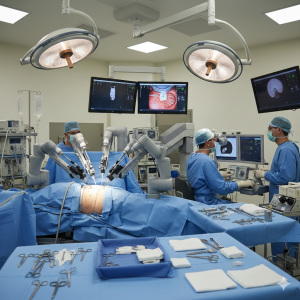 Robotic-assisted surgery has become he most exciting and transformative advancements for patients undergoing general surgical procedures. In NYC, robotic technology offers enhanced precision, reduced pain, and faster recovery compared to traditional open surgery. As innovation continues to evolve, robotic systems are redefining what’s possible in minimally invasive surgery.
This guide explores how robotic surgery works, the procedures commonly performed, and why it has become a preferred option for many patients and surgeons.
What Is Robotic-Assisted Surgery?
Robotic surgery is a form of minimally invasive surgery in which the surgeon controls robotic arms from a console. The system translates the surgeon’s hand movements into smaller, more precise motions inside the body.
Contrary to common misconception:
- The robot does not operate independently.
- The surgeon is in full control at all times.
- The system enhances, rather than replaces, surgical skill.
Robotic platforms provide high-definition 3D visualization and instruments with a greater range of motion than the human wrist.
How Robotic Surgery Works
During the procedure:
- Small incisions (typically 5–10 mm) are made.
- A tiny camera provides magnified, 3D images of the surgical site.
- Robotic arms hold specialized instruments.
- The surgeon operates from a nearby console with precise control.
This advanced visualization and dexterity allow for delicate dissection and accurate suturing.
Common General Surgical Procedures Performed Robotically
Robotic-assisted techniques are now widely used in general surgery for:
- Hernia repair (inguinal, ventral, incisional)
- Colon and rectal surgery
- Gallbladder removal (cholecystectomy)
- GERD and hiatal hernia repair
- Adrenal gland surgery
- Pancreatic and liver procedures
- Complex reoperations with scar tissue
Robotic systems are particularly beneficial for complex abdominal and pelvic procedures where precision is critical.
Key Benefits of Robotic Surgery
1. Greater Precision
- Enhanced dexterity beyond natural wrist movement
- Elimination of hand tremors
- Fine control for delicate structures
2. Improved Visualization
- High-definition, 3D magnified view
- Better identification of nerves and blood vessels
- Improved accuracy in tumor removal
3. Smaller Incisions
- Less tissue trauma
- Reduced postoperative pain
- Minimal scarring
4. Faster Recovery
- Shorter hospital stays
- Earlier return to work and daily activities
- Lower risk of infection
For busy NYC patients, quicker recovery can mean minimal disruption to professional and personal life.
Robotic Surgery vs. Traditional Laparoscopy
While both robotic and laparoscopic procedures are minimally invasive, robotic surgery offers distinct advantages in certain cases.
- Robotic surgery provides 3D visualization, while traditional laparoscopy typically offers 2D imaging.
- Robotic instruments allow greater range of motion.
- Complex suturing and reconstruction are often easier robotically.
However, not every case requires robotic assistance. An experienced surgeon will determine the best approach based on the patient’s condition.
Innovations Driving the Future of Robotic Surgery
Robotic systems continue to evolve rapidly. Recent innovations include:
- Fluorescence imaging to assess blood flow in real time
- Enhanced energy devices for precise vessel sealing
- Improved instrument flexibility and control
- Advanced ergonomic consoles reducing surgeon fatigue
These technological advancements are improving patient safety and expanding the range of procedures that can be performed minimally invasively.
Who Is a Candidate for Robotic Surgery?
Most patients undergoing general surgery are candidates for robotic procedures, especially those with:
- Hernias requiring complex repair
- Colon conditions needing precise dissection
- GERD or hiatal hernias
- Previous abdominal surgeries with scar tissue
Patients with severe infection, unstable medical conditions, or extensive disease may require alternative approaches.
Are There Risks?
Robotic surgery is considered very safe, but like any procedure, it carries potential risks:
- Bleeding
- Infection
- Injury to surrounding organs
- Anesthesia-related complications
These risks are minimized when surgery is performed by a highly trained and experienced robotic surgeon.
Conclusion: The Future of General Surgery Is Here
Robotic-assisted surgery represents a major leap forward in general surgical care. By combining surgical expertise with advanced technology, patients benefit from greater precision, less pain, and faster recovery. In a city like NYC—where access to cutting-edge medical care is essential—robotic surgery provides an advanced solution for a wide range of procedures.
If you are considering surgery, ask whether a robotic-assisted approach may be right for you. Modern innovation is making surgery safer, more efficient, and more comfortable than ever before.
Contact Information
LENOX HILL MINIMALLY INVASIVE SURGERY LLP
155 East 76th Street
New York, NY 10021
Tel: 646-846-1136
Email: lenoxhillsurgeons@gmail.com
Visit us online: https://www.lenoxhillminimallyinvasivesurgery.com