CALL TODAY 646-846-1136 | EMAIL



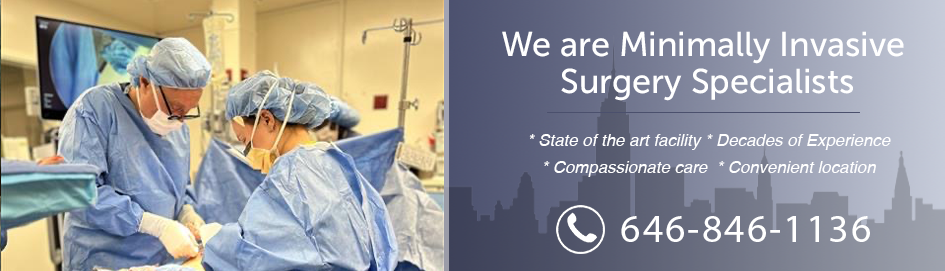
Surgical Experts Dedicated to Improving Lives
At Lenox Hill Minimally Invasive Surgery PLLC, Dr. Valery Dronsky and his staff of medical professionals provide compassionate care with the highest ethical & professional standards. In our state of the art facility, we offer surgical services using only the most cutting edge and current procedures and treatments. We specialize in general surgery, including extensive experience in performing hernia repair surgery. Our expertise is in minimally invasive surgery and robotic surgery. Minimally invasive and robotic surgery often allow patients to experience easier recovery than traditional open surgery. They also allow for more precise and less traumatic surgery. When robotic and minimally invasive surgery is not an option, we are also skilled and experienced in traditional open surgical procedures.
Dr. Dronsky is an experienced and highly skilled surgeon having undergone extensive training in school, residency and fellowships. He practices medicine with ethical behavior, compassion and superb bedside manner. In the operating room he exhibits precision mechanical abilities, analytical thinking and the ability to visualize tissue in three dimensions. These innate and learned skills allow Dr. Dronsky to be one of the most dexterous and skilled professionals in New York City and the Country.
Call us: 646-846-1136












PATIENT TESTIMONIALS
Recent Awards
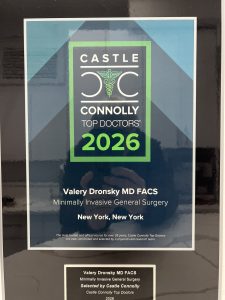
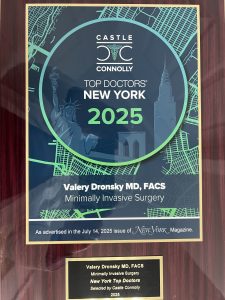
We are honored and deeply appreciative to have consistently received prestigious awards and recognition year after year, establishing us as one of New York’s foremost hospitals for a wide range of general surgeries, safety measures, specialized procedures, and overall excellence in healthcare. At Lenox Hill Minimally Invasive Surgery, our unwavering commitment lies in delivering exceptional care and unwavering support to our patients, guaranteeing their safety and successful recovery throughout their entire surgical experience.
Hospital Quality Awards
 America’s 50 Best Hospitals Award™ (2023, 2022)
Top 1% in the nation for providing the highest clinical quality year over year.

America’s 100 Best Hospitals Award™ (2021)
Top 2% in the nation for consistently delivering clinical quality year over year.

America’s 250 Best Hospitals Award™ (2023, 2022, 2021)
Top 5% in the nation for consistently delivering clinical quality.
Patient Safety Excellence Award™ (2023, 2022)
Top in the nation for providing excellence in patient safety by preventing infections, medical errors, and other preventable complications.
Specialty Clinical Quality Awards

America’s 100 Best Hospitals for Cardiac Care Award™ (2023, 2022, 2021, 2020, 2019)
Superior clinical outcomes in heart bypass surgery, coronary interventional procedures, heart attack treatment, heart failure treatment, and heart valve surgery.

America’s 100 Best Hospitals for Coronary Intervention Award™ (2023, 2022, 2021, 2020, 2019)
Superior clinical outcomes in coronary intervention procedures (angioplasty with stent).

America’s 100 Best Hospitals for Prostate Surgery Award™ (2023, 2022, 2021)
Superior clinical outcomes in prostate removal surgery and transurethral resection of the prostate.
Click to see all of our Healthgrades best doctors awards


Visit our main website at www.LenoxHillMinimallyInvasiveSurgery.com
Blog Posts are Below:
Category Archives: Colorectal Cancer
Addressing Colorectal Health: Procedures and Prevention
This blog explores the nuances of addressing colorectal health procedures and prevention and what patients need to know. Surgical procedures are a critical component of modern medicine, addressing a wide range of health concerns. Whether you’re preparing for surgery or considering your options, understanding the process and the latest advancements can help you make informed decisions.
Exploring the Need for Surgery
Surgery can address a variety of medical issues, from life-saving interventions to elective procedures that improve quality of life. It’s important for patients to understand why their doctor may recommend surgery and what outcomes they can expect.
Getting Ready for Your Operation
- Know Your Procedure: Researching the specific type of surgery you’re undergoing helps reduce anxiety and allows you to ask informed questions during consultations.
- Follow Preoperative Instructions: Surgeons typically provide guidelines such as fasting before surgery or adjusting medications. Adhering to these instructions is crucial for safety.
- Plan for Recovery: Consider who will assist you after surgery, whether it’s arranging transportation or having someone help with daily tasks during your recovery period.
Revolutionary Minimally Invasive Options
Minimally invasive surgery has revolutionized how procedures are performed, offering patients faster recovery times and fewer complications. These techniques often involve smaller incisions, reduced scarring, and a quicker return to normal activities.
How Early Detection Impacts Surgery
Screening is a cornerstone of preventive healthcare. Procedures like colonoscopies can detect issues such as polyps or colorectal cancer early, significantly improving treatment outcomes. Regular health check-ups and open communication with your healthcare provider are essential for staying proactive about your health.
Nutrition and Exercise After Surgery
Recovering from surgery requires patience and adherence to your doctor’s recommendations. Here are some general tips to ensure a smooth recovery:
- Follow Discharge Instructions: Carefully read and follow the post-operative care guidelines provided by your surgeon.
- Stay Active (But Don’t Overdo It): Gentle movement, as recommended, can help prevent blood clots and improve healing.
- Eat a Balanced Diet: Proper nutrition supports your body’s recovery process, promoting faster healing.
Understanding Surgical Risks and Alternatives
Before undergoing any surgical procedure, it’s important to have a thorough discussion with your surgeon. Key topics to cover include:
- The risks and benefits of the procedure.
- What to expect during the recovery period.
- Alternative treatments, if available.
Colorectal Health Procedures and Prevention: Contact Us Today
Lenox Hill Minimally Invasive Surgery LLP specializes in colorectal procedures that prioritize your health and well-being.
Call us to schedule your consultation.
LENOX HILL MINIMALLY INVASIVE SURGERY LLP
155 East 76th Street
New York, NY 10021
Tel: 646-846-1136
Email: lenoxhillsurgeons@gmail.com
Colorectal Cancer Surgery: Steps, Benefits, Side-Effects, Precautions & Prognosis
Colorectal Cancer Surgery
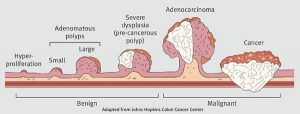
 When cells and tissue of your rectum and colon undergo neoplasm and start metastasizing, you could be diagnosed with colorectal cancer. Approximately 140,000 men and women are diagnosed with colorectal cancer annually which makes the malignancy one of the most prevalent forms of cancer. Surgical intervention is the best and most widely used treatment technique for dealing with colorectal cancer, usually preceded or succeeded by radiation and chemotherapy.
Though the colon or rectum could metastasize separately, both cancers are referred collectively owing to their exhibiting common traits. Cancer of the colon is more prevalent than rectal cancer.
Surgical options and methods
There are numerous types of colorectal cancer surgery based on the specific area of the large intestine that becomes cancerous. Some of the most common forms are:
- Ileocolectomy/right colectomy – In lleocolectomy, the ileum, lying on the colon’s right end is removed together with the colon’s right section. During a right colectomy procedure, only the colon’s right part is eliminated.
- Partial colectomy – In partial colectomy, only a specific section of the colon is expunged, as the expression indicates. After the malignant part is removed, the residual components are reconnected using a procedure known as anastomosis in medical parlance. Your bowel movement is usually not affected when you undergo partial colectomy.
- Total abdominal colectomy – Excision of the large intestine in entirety is referred to as total abdominal colectomy.
- The proctosigmoidectomy – proctosigmoidectomy procedure entails excising the infected part of the sigmoid colon and the rectum.
- Total proctocolectomy – The colon and the rectum is completely removed in a total proctocolectomy operation. In case, the anus is left intact, and its functioning is smooth, then the surgeon devises an ileal pouch shaped like the letter ‘J’ that stores feces temporarily until you defecate it.
- Abdominoperineal resection – Abdominoperineal resection involves the removal of the sigmoid colon, rectum, and anus followed by colostomy procedure for facilitating stool discharge.
Benefits
Surgeries are carried out either through the open mode or the minimally invasive, ‘keyhole’ technique where a laparoscope is used. Laparoscopic surgery is the choice option for the majority of patients as the process is less painful compared to open surgery, requires a shorter hospitalization, and a quicker recovery.
Side-effects
Like any other type of surgery, colorectal cancer surgery has the following common complications:
- Fatigue
- Pain
- Appetite loss
- Inflammation around the incision or incisions
- Leakage of pus and fluids
- Bleeding and laceration at the surgery site
- Numbness
- Organ dysfunction
- Infection
Precautions
 After the operation, the patient experiences extreme weakness and is not able to move about without assistance. Pain medication is administered intravenously or through injections. Antibiotics are also given to combat the risks of infections. Smooth stool passage indicates that the colon is recovering. Patients should start ambulating as early as possible post-surgery to trigger bowel movement and at the same avoid strenuous activities for about a month or two to expedite healing.
Prognosis
Survival rate five years after the surgery is less than 65% in Europe and North America. Chances or rate of survival is determined by the stage of cancer. Patients have a better chance of surviving longer if the malignancy is detected early at least five times more compared to delayed diagnosis.
Concluding Remarks
Colorectal cancer is more prevalent in developed countries in comparison to developing or underdeveloped nations. Surgery is the best option for treating and reversing the adverse effects of colon and rectal cancers.
Make an appointment with one of the experts to understand if this treatment can be the best as per your case.
References
- http://www.healthcommunities.com/gastrointestinal-surgery/postoperative-care-colon-colon-resection.shtml
- https://www.cancercenter.com/colorectal-cancer/questions/
- https://www.cancer.net/navigating-cancer-care/how-cancer-treated/surgery/side-effects-surgery
- https://www.webmd.com/colorectal-cancer/surgery-treat-colorectal-cancer#1
- https://www.hopkinsmedicine.org/health/articles-and-answers/ask-the-expert/colon-cancer-treatment-what-to-know-about-surgery’
- https://www.webmd.com/colorectal-cancer/colorectal-cancer-treatment-options#1
- https://en.wikipedia.org/wiki/Colorectal_cancer