CALL TODAY 646-846-1136 | EMAIL



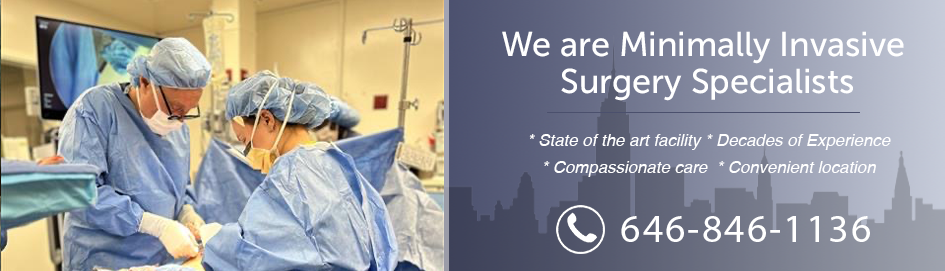
Surgical Experts Dedicated to Improving Lives
At Lenox Hill Minimally Invasive Surgery PLLC, Dr. Valery Dronsky and his staff of medical professionals provide compassionate care with the highest ethical & professional standards. In our state of the art facility, we offer surgical services using only the most cutting edge and current procedures and treatments. We specialize in general surgery, including extensive experience in performing hernia repair surgery. Our expertise is in minimally invasive surgery and robotic surgery. Minimally invasive and robotic surgery often allow patients to experience easier recovery than traditional open surgery. They also allow for more precise and less traumatic surgery. When robotic and minimally invasive surgery is not an option, we are also skilled and experienced in traditional open surgical procedures.
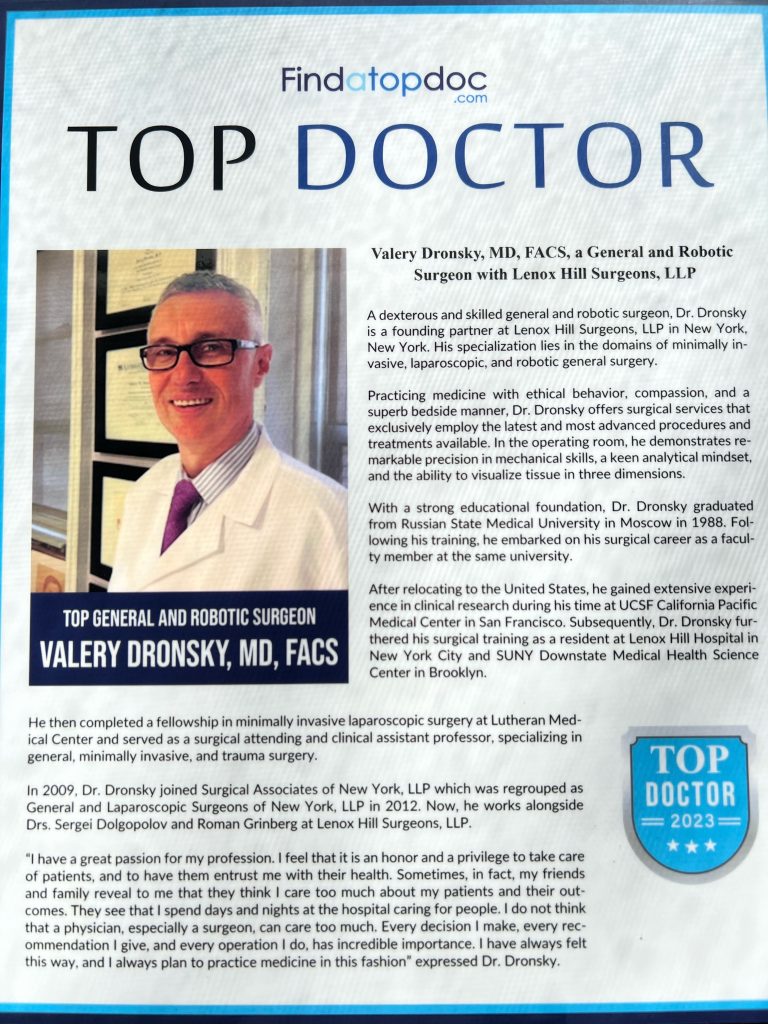
Dr. Dronsky is an experienced and highly skilled surgeon having undergone extensive training in school, residency and fellowships. He practices medicine with ethical behavior, compassion and superb bedside manner. In the operating room he exhibits precision mechanical abilities, analytical thinking and the ability to visualize tissue in three dimensions. These innate and learned skills allow Dr. Dronsky to be one of the most dexterous and skilled professionals in New York City and the Country.
Call us: 646-846-1136












PATIENT TESTIMONIALS
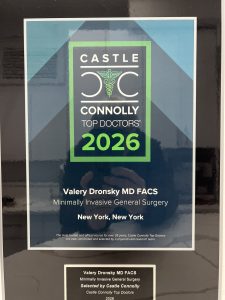
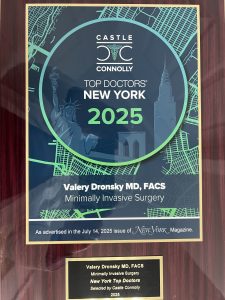
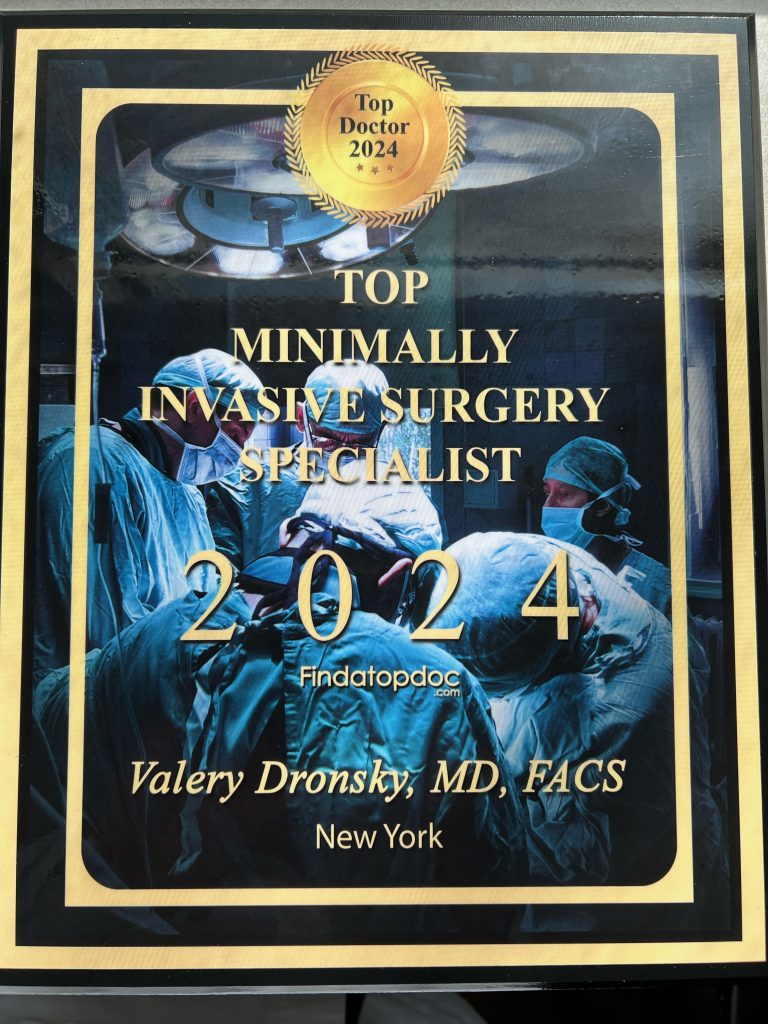
Recent Awards
We are honored and deeply appreciative to have consistently received prestigious awards and recognition year after year, establishing us as one of New York’s foremost hospitals for a wide range of general surgeries, safety measures, specialized procedures, and overall excellence in healthcare. At Lenox Hill Minimally Invasive Surgery, our unwavering commitment lies in delivering exceptional care and unwavering support to our patients, guaranteeing their safety and successful recovery throughout their entire surgical experience.
Hospital Quality Awards
 America’s 50 Best Hospitals Award™ (2023, 2022)
Top 1% in the nation for providing the highest clinical quality year over year.

America’s 100 Best Hospitals Award™ (2021)
Top 2% in the nation for consistently delivering clinical quality year over year.

America’s 250 Best Hospitals Award™ (2023, 2022, 2021)
Top 5% in the nation for consistently delivering clinical quality.

Patient Safety Excellence Award™ (2023, 2022)
Top in the nation for providing excellence in patient safety by preventing infections, medical errors, and other preventable complications.
Specialty Clinical Quality Awards

America’s 100 Best Hospitals for Cardiac Care Award™ (2023, 2022, 2021, 2020, 2019)
Superior clinical outcomes in heart bypass surgery, coronary interventional procedures, heart attack treatment, heart failure treatment, and heart valve surgery.

America’s 100 Best Hospitals for Coronary Intervention Award™ (2023, 2022, 2021, 2020, 2019)
Superior clinical outcomes in coronary intervention procedures (angioplasty with stent).

America’s 100 Best Hospitals for Prostate Surgery Award™ (2023, 2022, 2021)
Superior clinical outcomes in prostate removal surgery and transurethral resection of the prostate.
Click to see all of our Healthgrades best doctors awards


Visit our main website at www.LenoxHillMinimallyInvasiveSurgery.com
Blog Posts are Below:
Monthly Archives: August 2025
Umbilical and Incisional Hernias: When Is Surgery Necessary?
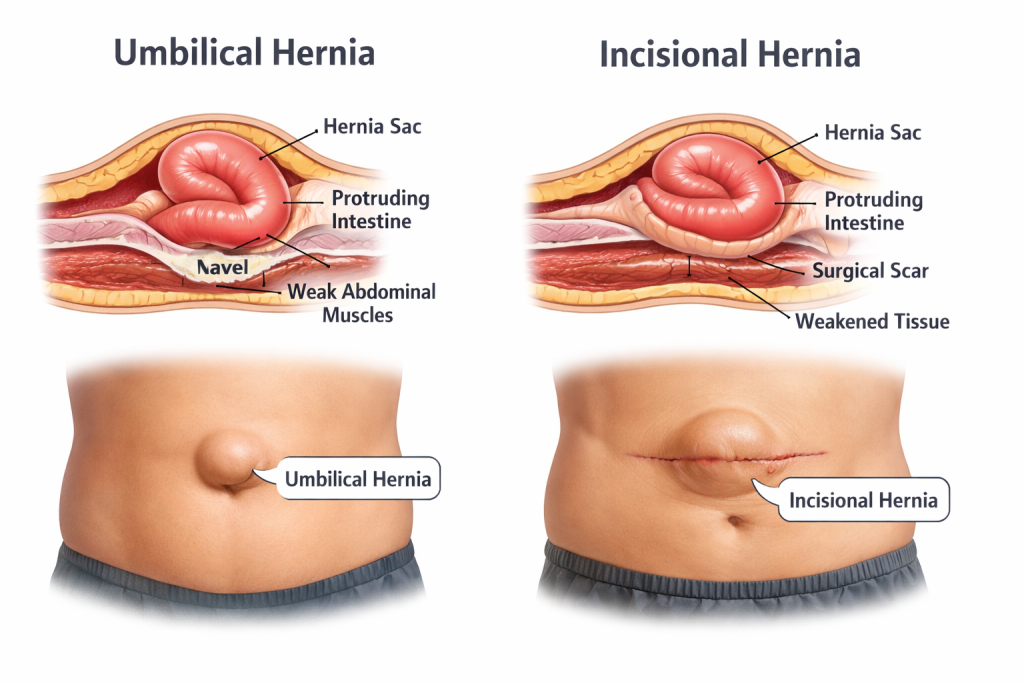
Hernias can develop in various parts of the abdominal wall, and two of the most frequently encountered types are umbilical hernias and incisional hernias. While both involve a bulge or protrusion of tissue through a weakened area in the abdominal muscles, their causes and treatment approaches differ. Understanding when surgery is necessary for these types of hernias is essential to prevent complications and ensure long-term health.
This guide will help you recognize the signs, understand the risks, and explore the surgical options available for umbilical and incisional hernias—especially using modern minimally invasive techniques.
What Is an Umbilical Hernia?
An umbilical hernia occurs when part of the intestine or fatty tissue protrudes through the abdominal wall near the belly button (umbilicus). This type of hernia is common in infants but also affects adults, particularly women who have experienced multiple pregnancies or people who are overweight.
Common Causes:
- Congenital weakness in the abdominal wall
- Pregnancy or multiple pregnancies
- Obesity and weight gain
- Heavy lifting or straining
In adults, umbilical hernias are less likely to resolve on their own and often require surgical correction.
What Is an Incisional Hernia?
An incisional hernia develops at the site of a previous surgical incision where the abdominal wall hasn’t fully healed. This type of hernia can occur weeks, months, or even years after surgery.
Risk Factors:
- Infection or poor wound healing after initial surgery
- Obesity or excessive strain on the surgical site
- Multiple abdominal surgeries
- Smoking or chronic diseases that impair healing
Incisional hernias can become large and uncomfortable, often requiring surgical repair to restore function and prevent complications.
Signs and Symptoms of Both Hernia Types
Regardless of the type, umbilical and incisional hernias tend to present with similar symptoms:
- A visible bulge near the belly button or previous surgical site
- Pain or pressure, especially when lifting, bending, or coughing
- A feeling of weakness or heaviness in the abdominal wall
- Redness, swelling, or tenderness in the hernia area (especially if strangulated)
- Nausea or vomiting if intestinal obstruction is present
If the hernia cannot be pushed back in or causes severe pain and discoloration, this could indicate strangulation—a serious condition requiring emergency surgery.
When Is Surgery Necessary?
Not all hernias require immediate surgery, but several factors make surgical repair the best option:
- The hernia is growing or becoming more painful
- Daily activities are impacted by discomfort or pressure
- There’s a risk of incarceration (trapped tissue) or strangulation (cut-off blood supply)
- The hernia is irreducible (cannot be pushed back in)
- Cosmetic or lifestyle concerns motivate the patient to seek repair
In adults, umbilical hernias rarely close on their own. Similarly, incisional hernias do not improve without intervention and often worsen over time.
Surgical Options: Open vs. Minimally Invasive Repair
There are two primary surgical techniques for repairing umbilical and incisional hernias:
1. Open Hernia Repair
- Traditional approach with a single incision over the hernia site
- Surgeon returns the protruding tissue to the abdomen and closes the defect, often using mesh for reinforcement
- May be recommended for large or complex hernias
2. Laparoscopic or Robotic-Assisted Hernia Repair
- Minimally invasive approach using several small incisions and a camera
- Surgeon places mesh from the inside to reinforce the abdominal wall
- Offers faster recovery, less post-operative pain, and lower infection risk
Your surgeon will recommend the best approach based on the hernia’s size, location, your medical history, and lifestyle.
Recovery After Surgery
Most patients return home the same day, especially with laparoscopic surgery. Recovery tips include:
- Avoid lifting heavy objects for at least 4–6 weeks
- Follow a high-fiber diet to prevent straining during bowel movements
- Monitor for signs of infection or recurrence
- Gradually increase activity as advised by your surgeon
Follow-up visits are essential to monitor healing and ensure the hernia repair is successful.
Conclusion: Don’t Delay Hernia Evaluation
Umbilical and incisional hernias can seem minor at first but tend to worsen over time. If you’re experiencing bulging, discomfort, or pressure in your abdominal area, it’s important to seek a professional evaluation. Minimally invasive surgical techniques make hernia repair safer and more efficient than ever, with less downtime and improved outcomes.
Contact Information
LENOX HILL MINIMALLY INVASIVE SURGERY LLP
155 East 76th Street
New York, NY 10021
Tel: 646-846-1136
Email: lenoxhillsurgeons@gmail.com
Understanding Inguinal Hernias: Causes, Symptoms, and Surgical Options
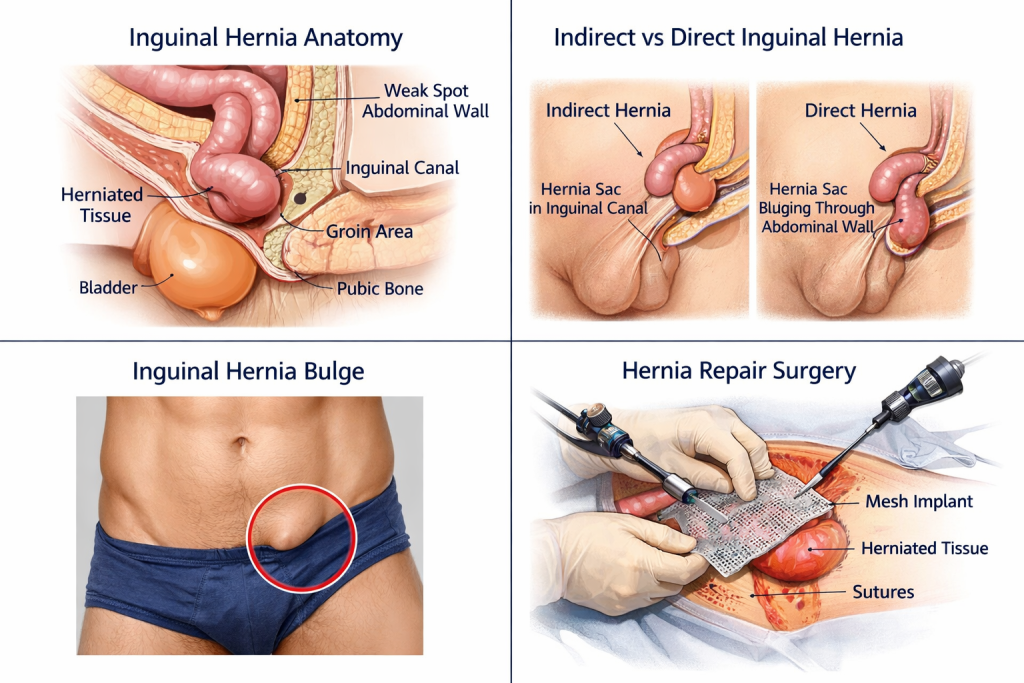
Inguinal hernias are among the most common types of hernias, particularly affecting men. They occur when a portion of the intestine or abdominal tissue protrudes through a weakened area in the lower abdominal wall, often near the inguinal canal. While some inguinal hernias may cause minimal discomfort initially, they can enlarge over time and lead to serious complications if left untreated.
This guide explores the causes, symptoms, diagnosis, and treatment options for inguinal hernias, especially the benefits of surgical repair using minimally invasive techniques.
What Causes an Inguinal Hernia?
Inguinal hernias develop when the muscles of the abdominal wall weaken or experience increased pressure, allowing internal tissue to push through.
- Congenital defects: Some people are born with a weakness in the abdominal wall that makes them more susceptible to hernias.
- Chronic straining: Straining from heavy lifting, persistent coughing, or constipation increases pressure inside the abdomen.
- Aging: Muscle strength naturally decreases with age, making older adults more vulnerable to hernias.
- Obesity: Excess body weight adds pressure on the abdominal muscles, contributing to hernia formation.
- Previous surgeries: Surgical incisions or scar tissue may weaken the abdominal wall, allowing hernias to develop.
Men are significantly more likely to develop inguinal hernias than women, due to anatomical differences and the presence of the spermatic cord passing through the inguinal canal.
Recognizing the Symptoms of an Inguinal Hernia
Symptoms of an inguinal hernia can range from mild to severe and may include:
- A noticeable bulge on one or both sides of the groin, which becomes more prominent when standing or straining
- Discomfort, heaviness, or aching in the groin area
- Pain when coughing, bending over, or lifting heavy objects
- Burning or pressure in the groin
- Swelling around the testicles in men, if the hernia descends into the scrotum
In some cases, the hernia may be reducible—meaning it can be gently pushed back into the abdomen. However, a strangulated hernia (where blood supply is cut off) is a medical emergency and may present with:
- Sudden, intense groin pain
- Redness or discoloration of the bulge
- Fever or nausea
- Inability to pass gas or have a bowel movement
If these symptoms occur, immediate surgical attention is required.
How Inguinal Hernias Are Diagnosed
A diagnosis is typically made through a physical examination. During the exam, the surgeon may ask you to stand and cough to make the hernia more visible. Imaging studies, such as an ultrasound or CT scan, may be used to confirm the diagnosis or assess the hernia’s size and contents.
Treatment Options for Inguinal Hernias
While small, asymptomatic hernias may be monitored, surgery is the definitive treatment for inguinal hernias. Surgical repair is recommended for:
- Persistent pain or discomfort
- Rapidly enlarging hernia
- Impairment in daily activities
- Risk of complications like incarceration or strangulation
Surgical Approaches
There are two main types of hernia repair surgery:
- Open hernia repair: A single incision is made in the groin to push the protruding tissue back and reinforce the abdominal wall with mesh.
- Laparoscopic or robotic-assisted repair: Multiple small incisions are used to insert a camera and instruments. The hernia is repaired from inside the abdomen using mesh reinforcement.
Minimally invasive techniques offer several advantages:
- Smaller incisions and less scarring
- Reduced postoperative pain
- Shorter recovery time and faster return to normal activities
- Lower risk of infection and complications
Your surgeon will determine the best approach based on your medical history, the size and type of hernia, and overall health.
Recovery After Inguinal Hernia Surgery
Most patients recover quickly after minimally invasive hernia repair. Common post-op recommendations include:
- Light activity within a few days
- Avoiding heavy lifting for 4–6 weeks
- Using over-the-counter or prescribed pain medication as needed
- Monitoring for signs of infection or recurrence
Follow-up appointments help ensure proper healing and assess for any complications.
Conclusion: Don’t Ignore the Signs of a Hernia
Inguinal hernias are common and often manageable, but they do not resolve on their own. If you suspect you have a hernia, it’s essential to seek evaluation from an experienced general surgeon. With today’s advanced surgical options, most patients experience excellent outcomes and can return to their daily routines with confidence and comfort.
Contact Information
LENOX HILL MINIMALLY INVASIVE SURGERY LLP
155 East 76th Street
New York, NY 10021
Tel: 646-846-1136
Email: lenoxhillsurgeons@gmail.com
Visit us online: https://www.lenoxhillminimallyinvasivesurgery.com